My Socialist Hall of Fame
During this chaotic era of vile rhetoric and manipulative tactics from our so-called bourgeois leaders, I am invigorated by the opportunity to reflect on Socialists, Revolutionaries, Philosophers, Guerrilla Leaders, Partisans, and Critical Theory titans, champions, and martyrs who paved the way for us—my own audacious “Socialism’s Hall of Fame.” These are my heroes and fore-bearers. Not all are perfect, or even admirable, but all contributed in some way to our future–either as icons to emulate, or as warnings to avoid in the future.
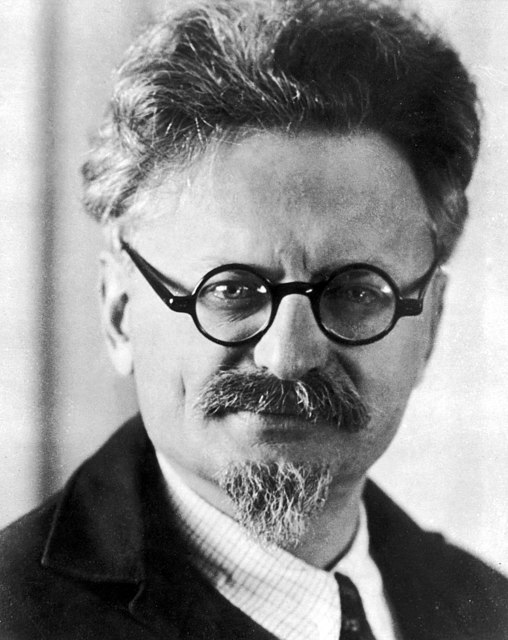
I first encounter Leon Trotsky in his autobiographical My Life. Here was a brilliant communist who spoke clearly without cant (at least to me), and explained much of what happened in the Russian Revolution, shedding light on the intricate dynamics of political alliances and social upheavals that shaped the era. His reflections on the struggles faced by the revolutionary movement provided valuable insights into the challenges of leadership and the commitment required to fight for one’s beliefs. Trotsky’s articulate narrative not only drew me into the historical context but also made me contemplate the lasting impact of these events on contemporary society, further igniting my curiosity about the complexities of revolutionary theory and practice.
I have encountered many individuals who cling to wildly different opinions on his revolutionary theories and contributions to world socialism. I refuse to subscribe to narrow-minded sectarianism. History is an unyielding beast, and a communist future demands fierce unity, not petty divisions. We need a collective effort towards a brighter tomorrow, whether you’re a Trotskyist, Maoist, Stalinist, or a staunch Marxist-Leninist. Embrace the struggle, respect and try to understand our fore-bearers–or get the hell out of the way!
Leon Trotsky (1879–1940) was a Marxist revolutionary, political theorist, and a key figure in the early years of the Soviet Union. Born Lev Davidovich Bronstein in Yanovka, Ukraine, he became a committed revolutionary during his youth. Trotsky played a leading role in the Russian Revolution of 1917 and served as the People’s Commissar for Foreign Affairs, organizing the October Revolution alongside Lenin. He later became the founder and leader of the Red Army, which proved crucial during the Russian Civil War (1917–1923).
Trotsky was a prolific writer and developed significant contributions to Marxist theory, including the concept of “permanent revolution.” He was also a vocal opponent of the bureaucratization of the Soviet state under Joseph Stalin. After losing the power struggle with Stalin, Trotsky was expelled from the Communist Party, exiled, and eventually deported from the Soviet Union in 1929.
Trotsky spent his final years in exile, primarily in Mexico, where he continued to write and organize opposition to Stalin’s policies. In 1940, he was assassinated in Mexico City by Ramón Mercader, an agent of Stalin’s secret police.
Bibliography
Here is a selection of key works by Leon Trotsky:
1. Trotsky, Leon. My Life: An Attempt at an Autobiography. Translated by Anya Bostock, Charles Scribner’s Sons, 1930.
• Trotsky’s autobiography recounts his revolutionary career and political battles.
2. Trotsky, Leon. The History of the Russian Revolution. Translated by Max Eastman, University of Chicago Press, 1932.
• A monumental three-volume history of the 1917 Russian Revolution, written from Trotsky’s perspective.
3. Trotsky, Leon. Permanent Revolution. Translated by John G. Wright, Pathfinder Press, 1930.
• This work outlines Trotsky’s theory of permanent revolution, emphasizing the need for international socialist revolutions.
4. Trotsky, Leon. Revolution Betrayed: What is the Soviet Union and Where is it Going? Translated by Max Eastman, Pathfinder Press, 1937.
• A critical analysis of Stalin’s regime and the degeneration of the Soviet Union.
5. Trotsky, Leon. Literature and Revolution. Translated by Rose Strunsky, Russell & Russell, 1924.
• A Marxist critique of literature and art in the context of revolutionary society.
6. Trotsky, Leon. Fascism: What It Is and How to Fight It. Pathfinder Press, 1944.
• A collection of Trotsky’s writings on the rise of fascism and the strategies for combating it.
Trotsky’s works remain influential among Marxists, socialists, and historians seeking to understand the dynamics of revolution, socialism, and the challenges of building a workers’ state.
 Letters from Tomis
Leave a comment