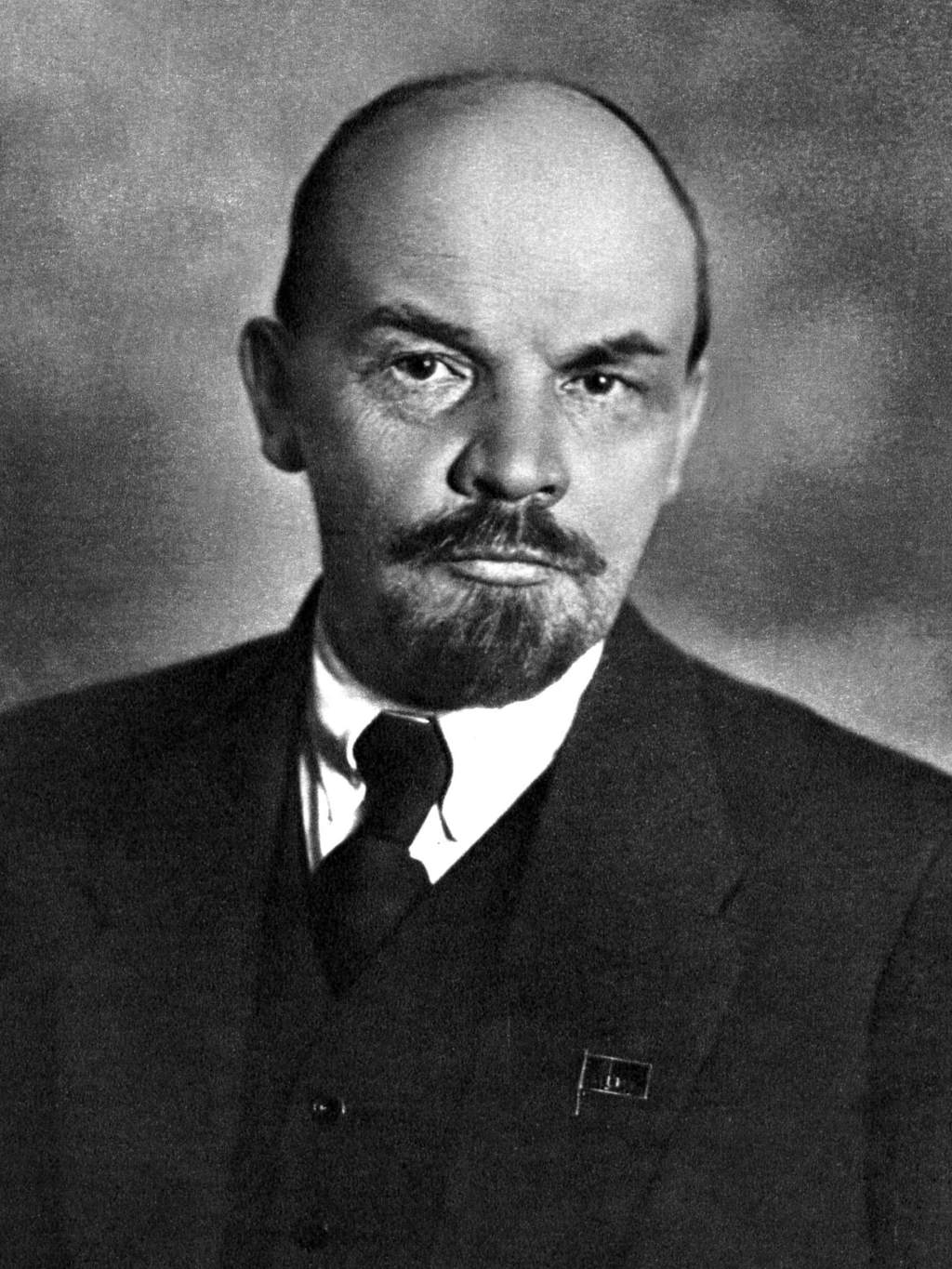
My Socialist Hall of Fame
During this chaotic era of vile rhetoric and manipulative tactics from our so-called bourgeois leaders, I am invigorated by the opportunity to reflect on Socialists, Revolutionaries, Philosophers, Guerrilla Leaders, Partisans, and Critical Theory titans, champions, and martyrs who paved the way for us—my own audacious “Socialism’s Hall of Fame.” These are my heroes and fore-bearers. Not all are perfect, or even admirable, but all contributed in some way to our future–either as icons to emulate, or as warnings to avoid in the future.
Vladimir Lenin is one of those pivotal leaders whose absence in 20th Century socialist history is practically unthinkable, as his revolutionary ideas and strategies not only shaped the course of the Russian Revolution but also influenced socialist movements worldwide. His theories on imperialism and the role of the proletariat laid the groundwork for subsequent political ideologies, inspiring countless activists and thinkers across various nations to adopt and adapt his principles. The legacy of Lenin’s leadership, characterized by a commitment to the establishment of a classless society, continues to evoke debates on governance, economics, and social justice in contemporary discussions, making him an enduring figure in the discourse surrounding socialism and its evolution throughout history.
Vladimir Ilyich Ulyanov (Lenin) (April 22, 1870 – January 21, 1924) was a revolutionary, political theorist, and the founder of the Russian Soviet Federative Socialist Republic, which became the primary constituent of the Soviet Union. He served as the head of government of Soviet Russia from 1917 to 1924 and of the Soviet Union from its establishment in 1922 until his death.
Early Life and Education
Lenin was born in Simbirsk (now Ulyanovsk), Russia, into a middle-class family. His father, Ilya Nikolaevich Ulyanov, was an educator, while his mother, Maria Alexandrovna, came from a family of landowners. Lenin was deeply influenced by his older brother Alexander, who was executed in 1887 for his role in a plot to assassinate Tsar Alexander III. This event profoundly shaped Lenin’s revolutionary outlook.
Lenin excelled in his studies and enrolled at Kazan University to study law. However, his involvement in student protests led to his expulsion. He later completed his law degree as an external student and practiced briefly as a lawyer.
Revolutionary Activities
By the 1890s, Lenin became deeply involved in Marxist activities. He joined the Russian Social Democratic Labour Party (RSDLP) and was heavily influenced by the writings of Karl Marx and Friedrich Engels. Lenin’s pamphlet What Is to Be Done? (1902) laid out his vision for a disciplined, centralized revolutionary party.
In 1903, a split in the RSDLP led to the formation of two factions: the Bolsheviks, led by Lenin, and the Mensheviks. Lenin advocated for a vanguard party to lead the proletariat in revolution.
Role in the 1917 Revolution
Lenin played a pivotal role in the Russian Revolution of 1917. After years of exile in Switzerland, Germany facilitated his return to Russia during World War I, hoping to destabilize the Tsarist regime. Following the February Revolution, Lenin issued the April Theses, calling for an end to the war, land redistribution, and “All power to the Soviets.”
In October 1917, Lenin led the Bolshevik seizure of power, overthrowing the Provisional Government in Petrograd. The October Revolution marked the establishment of Soviet rule.
Leader of Soviet Russia
As head of the Soviet government, Lenin implemented radical policies, including the nationalization of industry, the redistribution of land, and the withdrawal from World War I through the Treaty of Brest-Litovsk (1918). His leadership during the Russian Civil War (1917–1923) ensured Bolshevik control, but it came at a high human cost.
Lenin introduced the New Economic Policy (NEP) in 1921, allowing some private enterprise to stabilize the economy. However, his health began to deteriorate due to strokes, and he became increasingly sidelined from active politics.
Death and Legacy
Lenin died on January 21, 1924, in Gorki, near Moscow. His body was embalmed and placed in a mausoleum in Red Square. Lenin’s leadership established the framework for the Soviet Union.
Bibliography
1. Lenin, Vladimir Ilyich. What Is to Be Done? Burning Questions of Our Movement. 1902.
• A foundational work outlining Lenin’s vision for a revolutionary party.
2. Lenin, Vladimir Ilyich. The State and Revolution. 1917.
• This work describes Lenin’s theories on the state and the necessity of proletarian dictatorship. It’s as relevant today as when he wrote it.
3. Service, Robert. Lenin: A Biography. Macmillan, 2000.
• A comprehensive modern biography of Lenin’s life and politics.
4. Pipes, Richard. The Russian Revolution. Alfred A. Knopf, 1990.
• A critical analysis of Lenin’s role in the Russian Revolution.
5. Read, Christopher. Lenin: A Revolutionary Life. Routledge, 2005.
• A detailed account of Lenin’s personal and political life.
6. Figes, Orlando. A People’s Tragedy: The Russian Revolution: 1891–1924. Viking Penguin, 1996.
• Explores the broader context of the revolution and Lenin’s role in it.
These sources provide a detailed understanding of Lenin’s life, ideology, and historical impact.
 Letters from Tomis
Leave a comment