Fourteenth in a series of reflections on my thoughts after reading What is Marxism: An Introduction into Marxist Theory by Rob Sewell and Alan Woods. The thoughts, opinions, and any errors are mine alone.
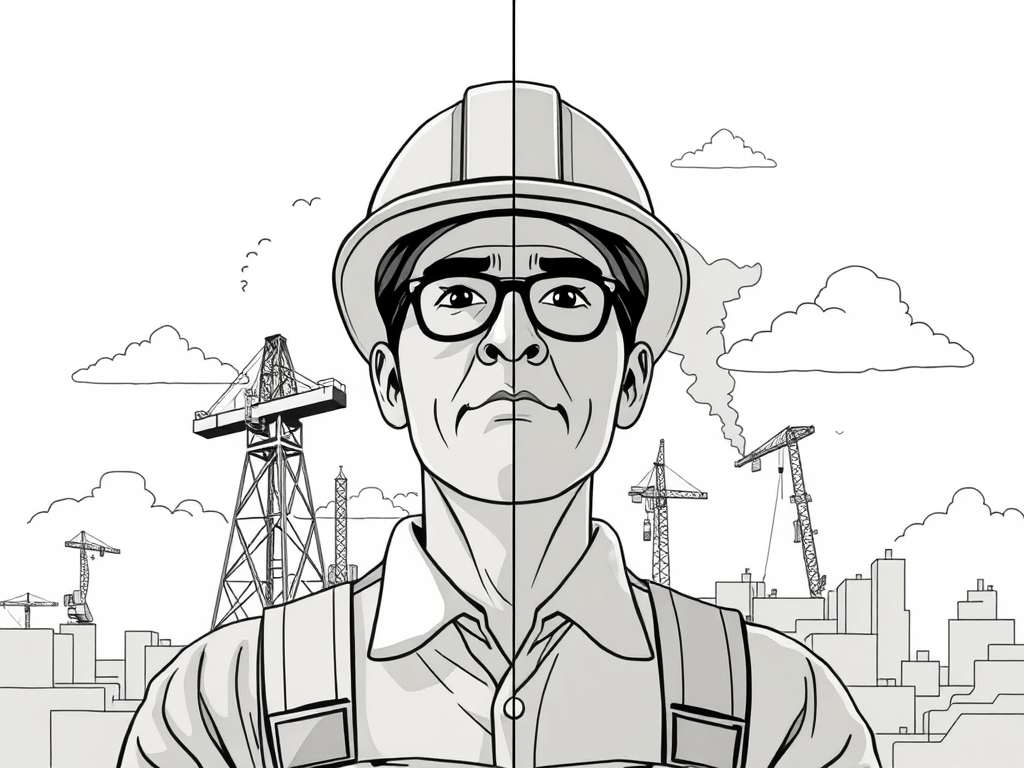
The notion that one might exist in two places simultaneously, though ostensibly absurd, offers a philosophical challenge worth considering—particularly when viewed through the prism of dialectical materialism. It is the sort of question that reveals the limits of metaphysical thinking and the peculiar contradictions of human perception in a material world. As with any paradox, the question itself is not an invitation to metaphysical speculation but rather an entry point into interrogating the structures that make such speculation possible.
Let us begin by dispensing with the lazy mysticism that often accompanies such musings. Claims of bilocation—whether by saints, shamans, or quantum physicists waxing lyrical about entanglement—are less interesting as evidence of a fractured reality than as symptoms of humanity’s relentless desire to transcend the material conditions of its existence. To the dialectical materialist, the idea of “being in two places at once” is not a supernatural phenomenon to be believed or dismissed, but a metaphorical expression of the contradictions embedded in material reality.
The Dialectics of Place and Time
Dialectical materialism teaches us to approach phenomena not as static absolutes but as dynamic processes. “Place,” in this sense, is not a fixed point but a relation—a nexus of interactions in physical space. To say that one is “in a place” is to affirm not only the materiality of the individual but also the conditions that define that place. This relational understanding, rooted in material reality, negates the idealist notion of place as an abstract, isolated concept. A place, after all, has no meaning outside the movement and interactions of the matter within it.
The contradiction of being in two places at once is thus not a violation of material laws but a misunderstanding of how those laws operate. Consider, for instance, the laborer under capitalism. By selling their labor power, the worker is “present” both at the site of production and in the commodities they produce. The product of their labor, alienated from their immediate presence, circulates through markets far removed from the factory floor, creating a peculiar form of “presence” across space. Is the worker not, in a very real sense, in two places at once—both at the point of production and in the commodity form that embodies their labor?
The Illusion of Simultaneity
The question of simultaneity complicates matters further. To claim that one can exist in two places at the same time is to invoke a temporal framework that is itself contingent on material processes. Dialectical materialism rejects the notion of time as a universal, linear continuum. Instead, time is understood as an emergent property of material interactions—measured, experienced, and constructed through the rhythms of labor, nature, and history.
Einstein, who was far more materialist than mystic, demonstrated that simultaneity is relative—a proposition that dialectical materialists find congenial. If time itself is a relational construct, then the question of “at the same time” dissolves into a question of perspective. One can only “be” in two places at once if the conditions of observation allow for such a claim to be meaningful.
Take, for instance, the technological achievements of our era. The modern subject—armed with smartphones, satellites, and fiber-optic cables—exists in a global simultaneity that would have been inconceivable a century ago. One can “attend” a meeting in London via Zoom while seated in a café in Buenos Aires. Is this not a form of bilocation, made possible by the material relations of digital technology and global capitalism? Yet this simultaneity is not a transcendence of material reality but a reconfiguration of it, dependent on the labor and infrastructure that sustain these networks.
The Unity of Opposites
At the heart of this question lies a deeper dialectical insight: the unity of opposites. To be “in one place” is, dialectically speaking, to negate the possibility of being “elsewhere.” Yet this negation is not an end in itself but a condition for transformation. Movement, after all, is the synthesis of presence and absence—a constant becoming that reflects the dialectical motion of matter.
Consider the atom, whose electrons exist not as discrete particles in fixed locations but as probabilistic clouds, spread across potential states. Does this undermine the materialist worldview? Hardly. It affirms the dialectical nature of reality, in which entities are defined not by static properties but by dynamic relations. The atom is both here and not here, its presence a function of probabilities rather than certainties. This is not mysticism; it is the dialectic in action, illuminating the contradictions inherent in material existence.
Toward a Materialist Resolution
To the metaphysician, the question of being in two places at once invites speculative gymnastics. To the dialectical materialist, it is an opportunity to unmask the contradictions that underpin our understanding of space, time, and being. The paradox, such as it is, does not point to a world beyond material reality but to the complexity and dynamism of the reality we inhabit.
One cannot, strictly speaking, be in two places at once—unless one redefines “place,” “time,” or “being” through the lens of relational materialism. But in doing so, the question itself dissolves, revealing a deeper truth: that existence is not a fixed point but a process, a ceaseless interplay of contradictions that shape the material world.
And so, like many questions posed to dialectical materialists, this one turns out not to be about transcendence but about immanence. To be in one place or another at the same time is not to defy the laws of material reality but to grapple with the dialectical motion that defines it. In the end, the answer is not a riddle to be solved but a relationship to be understood—a dance of presence and absence that reminds us, always, of the restless dynamism of the material world.
 Letters from Tomis
Leave a comment