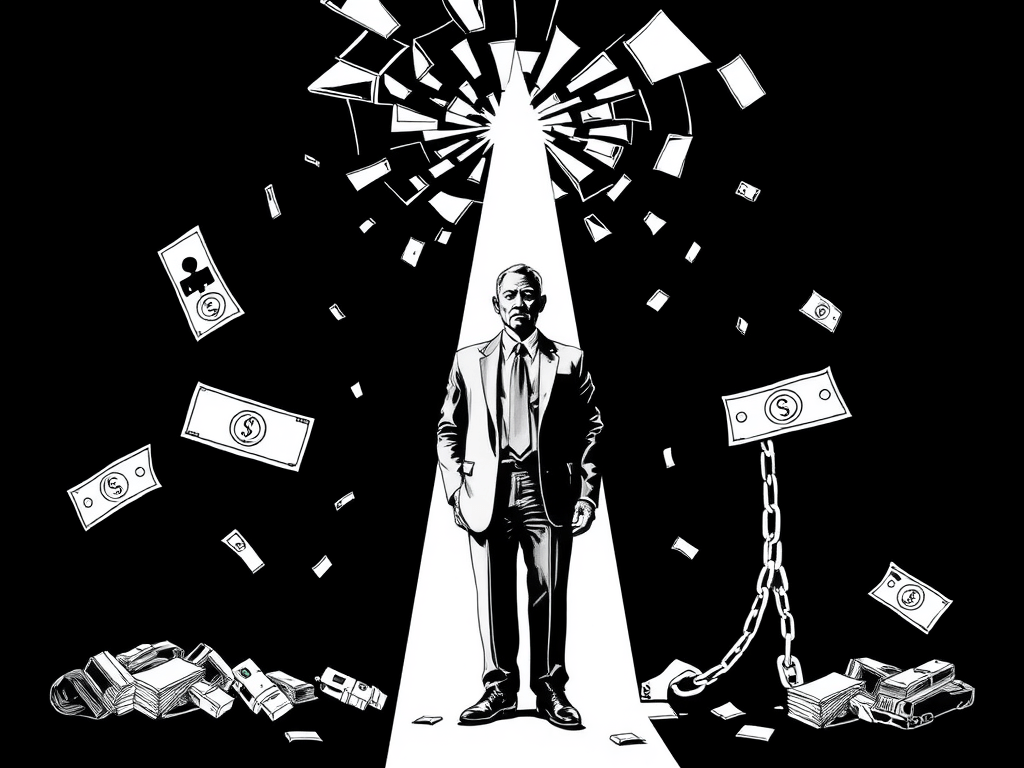
In an age where the contradictions of late capitalism become not only apparent but grotesquely explicit, the recent shooting of the UnitedHealthcare CEO is emblematic of a society teetering on its moral precipice. Let us not mince words: this is not merely an act of violence, nor should it be neatly reduced to a “tragic event” in the language of corporate PR. Instead, it demands that we interrogate the conditions under which such acts become conceivable in the first place. For this, I must summon the insights of Georg Lukács, whose essay “Legality and Illegality” in his brilliant History and Class Consciousness offers a chillingly prescient lens for understanding the dark symbiosis between systemic oppression and sporadic revolt.
Lukács argued that the capitalist state, in its legal apparatus, pretends to offer universality and fairness while fundamentally operating to preserve the interests of the ruling class. The bourgeoisie thrives on this illusion of legality, shielding the machinery of exploitation under the veil of law and order. Yet, this very system breeds its antithesis: illegality as a desperate and fragmented response to a system that is itself fundamentally unjust. The shooting of a CEO, though shocking to the bourgeois moral sensibility, is not an aberration. It is the logical endpoint of a society where legality serves to sanctify the gross inequalities of wealth, power, and life itself.
One must not celebrate violence for violence’s sake, as the dullards of both reactionary and anarchist extremes are prone to doing. But to ignore its historical context is to commit intellectual malpractice. In the United States, where the healthcare system is a sprawling colossus of privatized profit masquerading as public good, the name “UnitedHealthcare” is less a brand than a symbol of systemic cruelty. How many people have lost their homes, their dignity, their very lives because of the cold calculus of “cost-benefit analysis” that determines whether a treatment is “covered”? How many families have endured sleepless nights navigating Kafkaesque bureaucracies, only to be told that the miracle drug they need is “not on the formulary”?
Lukács reminds us that the proletariat’s awakening to class consciousness is not a straight line but a dialectical process. Isolated acts of violence, such as this shooting, are not class consciousness in its mature form—they are, rather, the inchoate rage of a populace brutalized by systems that claim moral superiority while engineering despair. The shooter, one suspects, did not rise from his bed with a dog-eared copy of The Communist Manifesto in hand. His act, though immoral in the strictest bourgeois sense, is a tragic symptom of a society in decay.
Let us also interrogate the sacred cow of “legality” that will inevitably dominate the discourse. The media will frame this event as a clear-cut case of criminality: a good CEO felled by an evil gunman. Yet, as Lukács would remind us, the veneer of legality cannot absolve the UnitedHealthcare CEO of their participation in a system that sentences countless people to premature death every year. If the law permits the accumulation of obscene wealth through the systematic denial of care to those who cannot afford it, then is the law itself not criminal in its essence? And if legality has failed to protect the lives of ordinary citizens, why should it be considered sacrosanct when applied to its beneficiaries?
Here, one might hear the plaintive cries of the capitalist liberal: “Surely, this violence only sets us back! Surely, dialogue is the way forward!” Ah, yes, dialogue—the sterile opiate of those who have never been denied insulin or chemotherapy. The working class has been in “dialogue” with the forces of capital for centuries, and what has it achieved? Incremental reforms that are promptly eroded at the first whiff of corporate inconvenience. It is precisely the failure of dialogue, the repeated betrayal of legality, that drives individuals to the precipice of despair.
To decry the shooting while ignoring the structural violence of a system that treats human life as a line item on a balance sheet is to feign outrage while remaining complicit. The tragedy lies not only in the bloodshed but in the fact that such acts will continue, inevitably, as long as the conditions that produce them remain unaddressed. This is the bitter truth of Lukács’s dialectical insight: violence under capitalism is not an anomaly but a feature, manifesting both in the quiet violence of starvation and in the loud violence of rebellion.
So let us not waste our energies on empty moralizing. The UnitedHealthcare CEO was not a martyr but a manager of oppression. The shooter was not a revolutionary but a tragic consequence of systemic despair. The true villain remains the system itself, a machine of exploitation that forces us to live in a world where acts of desperation become thinkable.
Until we dismantle this system and replace it with one rooted in genuine socialist solidarity and care, the cycle of legality and illegality, of structural violence and retaliatory rage, will persist. And with it, the blood will continue to flow—not only in boardrooms but, more importantly, in hospital wards and working-class homes across the land.
 Letters from Tomis
Leave a comment