Philosophy
-
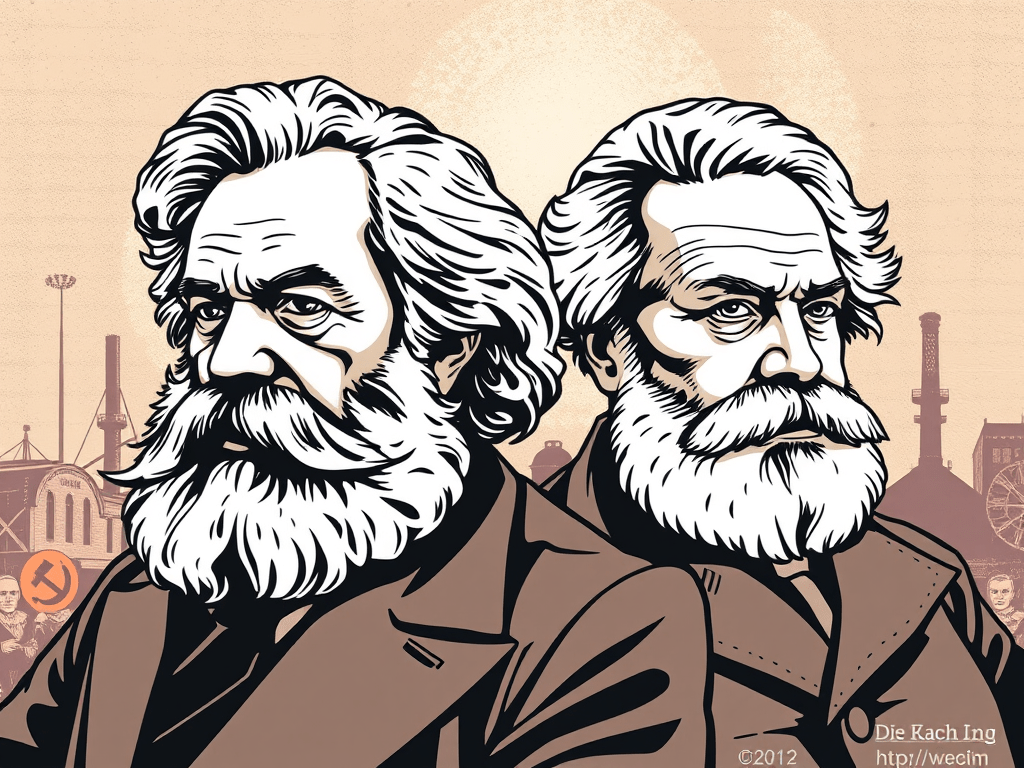
Karl Marx and Friedrich Engels revolutionized political thought by emphasizing materialism and the dynamics of history rooted in economic realities. They critiqued utopian socialism, arguing capitalism’s inherent contradictions would lead to its downfall. Their insights into ideology became foundational for later critique, challenging society’s structures and urging responsibility in transforming the world.
-
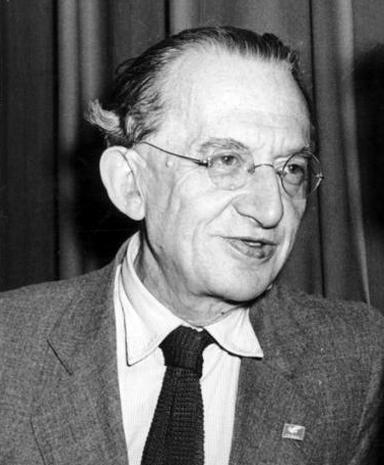
Georg Lukács, a prominent Hungarian Marxist philosopher, significantly influenced 20th-century Marxist theory with concepts like reification and class consciousness. His key works include “History and Class Consciousness,” where he explored the alienation of modernity. Engaging critically with Marxism, Lukács’s legacy informs contemporary debates on capitalism, alienation, and revolutionary change.
-

Boxing Day, the day after Christmas, symbolizes both charitable giving and consumerism, highlighting the contradictions of human nature. Despite its roots in generosity, it often devolves into a pursuit of material goods. This duality reflects our capacity for empathy and self-interest, making Boxing Day a day of complex significance and choices.
-

The content explores the philosophical concept of being in two places simultaneously through the lens of dialectical materialism. It argues this idea reflects humanity’s contradictions rather than a supernatural phenomenon. By examining labor, technology, and the nature of time, it emphasizes that existence is a dynamic interplay rather than fixed states, challenging metaphysical speculation.
-
Friedrich Engels’ Anti-Dühring critically examines Eugen Dühring’s theories while expounding Marxist thought. Through its structured approach, the book elucidates dialectical and historical materialism, addressing socialism’s scientific basis. Engaging and relevant, it has shaped socialist movements and offers essential insights into class struggle and societal transformation. A must-read for understanding socialism.
-

The text explores how accidents shape history, challenging the notion that monumental events are solely the result of deliberate actions or ideologies. It argues that small, chance occurrences often alter the course of nations, emphasizing that history is not linear but a complex interplay of chaos and contingency, making our choices significant.
-
In the tenth installment of reflections on What is Marxism by Sewell and Woods, Trotsky’s The ABC of Materialist Dialectics is praised for its clarity and passion. It connects philosophical concepts with class struggles, viewing contradictions as catalysts for change. Trotsky offers a dynamic approach to dialectics, urging critical thought and action for social transformation.
-

Formal logic, often overlooked, is essential for clear thinking and moral reasoning, providing rigorous principles for valid arguments. Originating from Aristotle, it serves both philosophy and society by exposing unexamined assumptions and fallacies. In an age of emotional discourse, its principles are vital for distinguishing truth from confusion and fostering intellectual clarity.
-
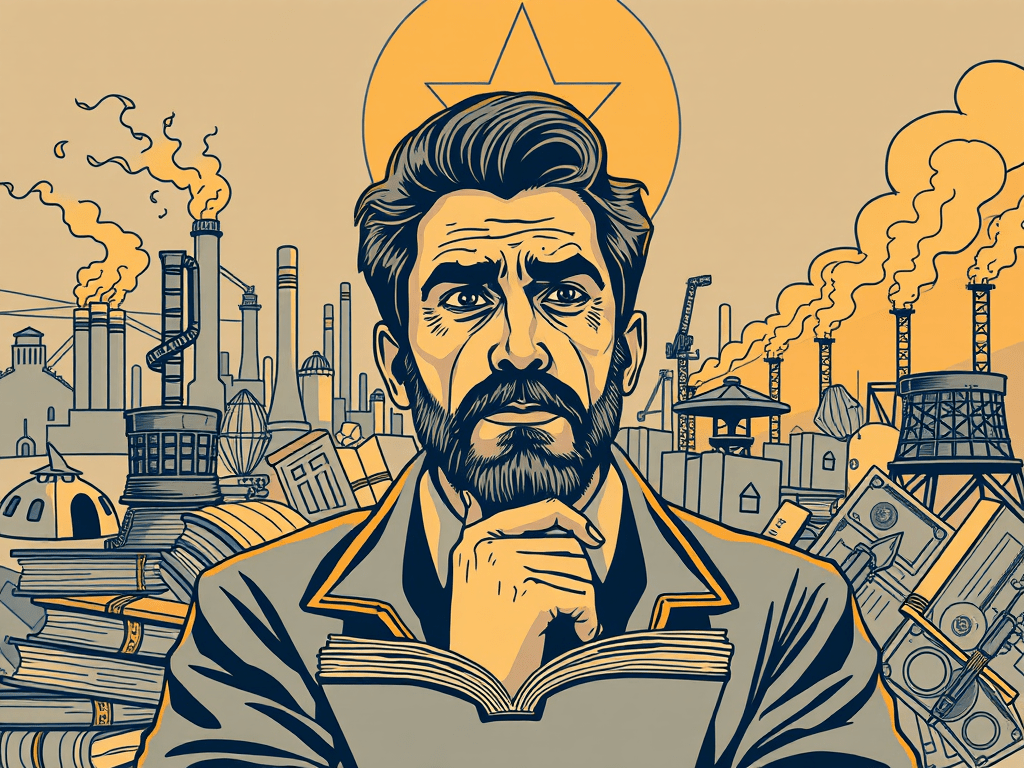
Declaring oneself a Marxist today invites skepticism due to historical misuses of Marxism. However, the author embraces a critical and ethical Marxism that critiques power structures and capitalism’s inherent contradictions. This perspective promotes human dignity, challenges the status quo, and insists on the necessity of exploring alternatives to injustice and inequality.
-

Mechanistic materialism, while intellectually appealing, offers a limited perspective on reality. It reduces complexities of existence, including creativity and morality, to mere physical processes. Although materialism has grounded our understanding of the universe, it fails to acknowledge essential dimensions of human experience and understanding, necessitating a broader approach to reality.
 Letters from Tomis