Book Review
-

André Breton’s Nadja, a key Surrealist work, intertwines memoir and novel, exploring themes of alienation, desire, and bourgeois rationalism through the character of Nadja. Mark Polizzotti’s translation preserves the text’s complexity, highlighting its paradoxes. The narrative critiques capitalist culture while exposing gendered contradictions in artistic liberation, making it vital for Marxist discourse.
-

James Davidson’s “Courtesans and Fishcakes” explores Athenian social life through a lens of consumption, emphasizing class relations and material production. By focusing on food, sex, and political discourse, Davidson reveals how pleasures are intertwined with labor exploitation in a slave-based economy, prompting a Marxist critique of cultural practices and underlying socio-economic frameworks.
-
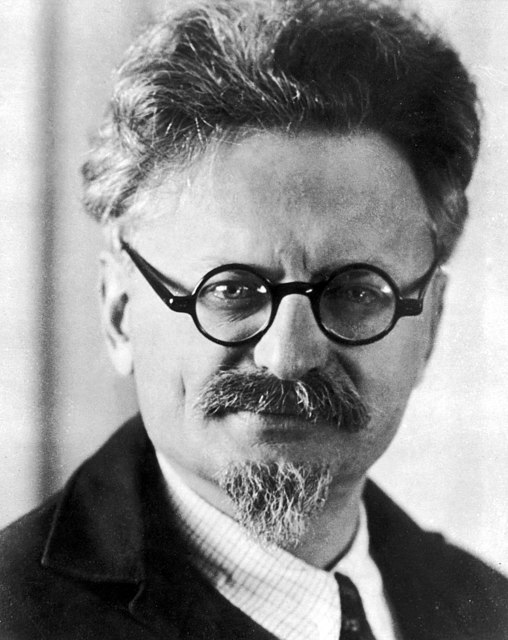
Leon Trotsky’s Marxism in Our Time (1939) reasserts the relevance of Marxist theory amidst global crises. Trotsky defends Marxism against claims of obsolescence, arguing it remains vital for understanding capitalist contradictions and fighting bureaucracy. His analysis underscores the necessity of revolutionary action and internationalism, making it crucial for contemporary struggles against oppression.
-

Samuel Beckett’s “Waiting for Godot,” published by Grove Press in 1954, exemplifies the “Theatre of the Absurd.” Its minimalist structure and circular dialogue challenge conventional interpretations, reflecting existential and political themes. The edition highlights Beckett’s linguistic precision and openness, rewarding deep study, yet its ambiguity can frustrate those seeking clearer meanings.
-
Leon Trotsky’s “In Defence of Marxism” is a critical examination of revolutionary methods amidst inner-party disputes within the Socialist Workers Party. Written in 1939-40, it emphasizes dialectical materialism, party strategy, and class analysis, providing a framework for defending the USSR while contesting Stalinism. The book’s insights on party democracy and polemic reinforce its relevance for…
-

The Torrents of Spring by Turgenev explores themes of belatedness and self-betrayal through middle-aged Dmitry Sanin, who reflects on his ill-fated love life. The novella examines moral collapse under erotic influence, while addressing class and national identities, culminating in a poignant study of memory and the complexities of adult obligation.
-

Leon Trotsky’s “Leon Trotsky Presents the Living Thoughts of Karl Marx” provides a dynamic introduction to Marxist thought, emphasizing historical materialism and the labor theory of value. Written in exile, Trotsky combines pedagogical and polemical tones, urging readers to view Marxism as a living method for social transformation rather than a static doctrine.
-

Frederic Jameson’s Postmodernism examines late capitalism’s cultural dynamics, identifying postmodernism as a critical ideological manifestation. While praised for its historical materialism, it lacks a revolutionary praxis, offering diagnostics instead of solutions. Jameson emphasizes the need for cognitive mapping but fails to connect these ideas with grassroots political action, ultimately serving as a theoretical lens rather…
-

Émile Zola’s Money explores finance capitalism and moral decay during the Second Empire through the character Aristide Saccard. While offering insights into 19th-century capitalism and financial mechanisms, the novel suffers from narrative redundancy and lack of psychological depth. It serves as a significant study of Zola’s naturalism but lacks enduring aesthetic power.
-

Panitch and Gindin’s “The Making of Global Capitalism” reinterprets globalization, emphasizing the U.S. state’s crucial role over market forces. Through historical analysis, they argue that American political structures have actively shaped global capitalism. The book critiques mainstream narratives, offering a Marxist perspective on the interplay of finance, labor, and neoliberalism, while acknowledging its dense prose.
 Letters from Tomis