Politics
-
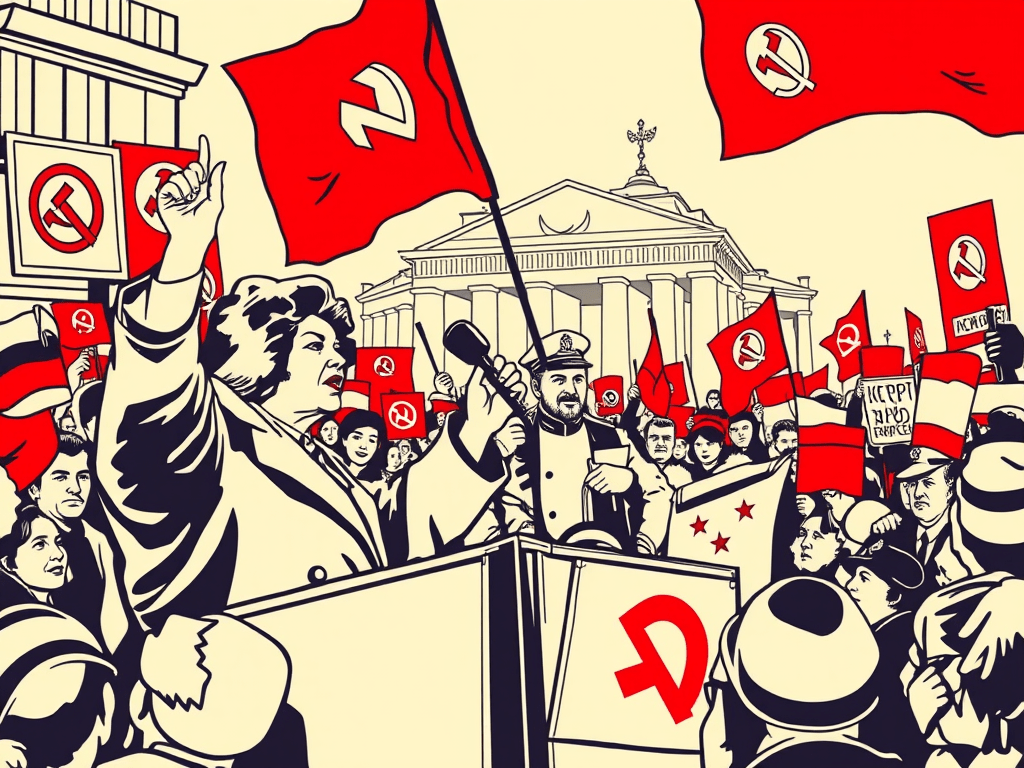
The German Communist Party (KPD) was founded in 1918, evolving through revolutionary turmoil and ideological shifts, primarily influenced by Luxemburgism and Marxism-Leninism. It ultimately faced repression under the Nazis and later transformed into the Socialist Unity Party in East Germany, while being banned in West Germany. The KPD’s complex legacy reflects its commitment to socialism,…
-
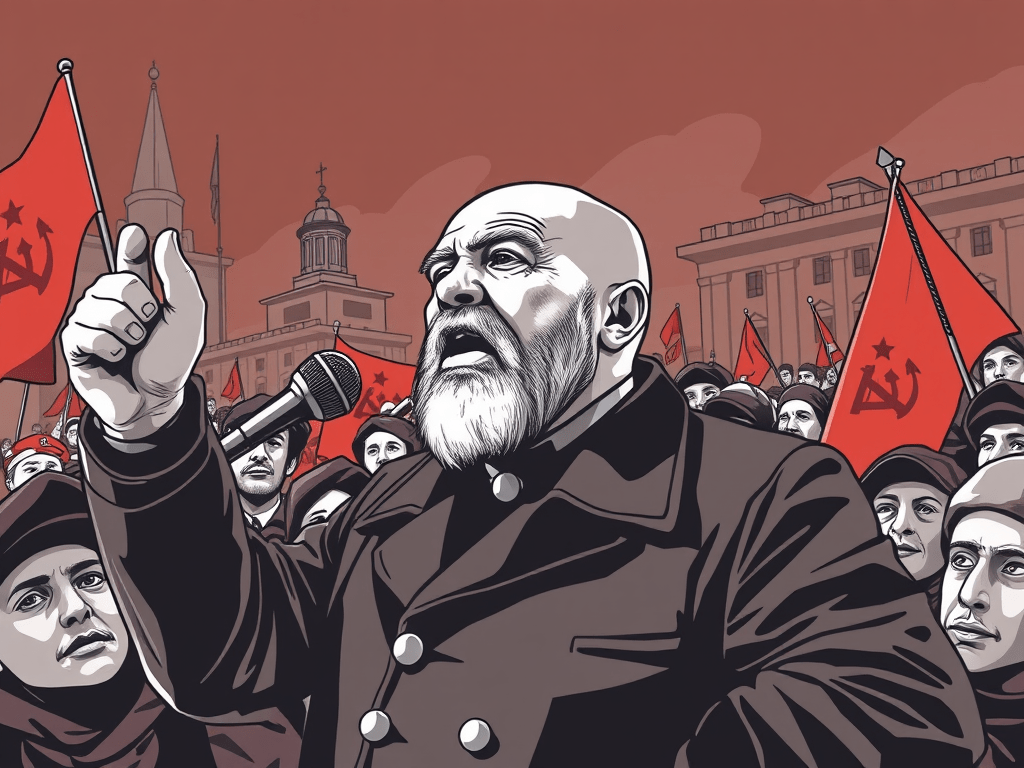
Vladimir Lenin’s State and Revolution is a pivotal Marxist text that critiques reformist approaches and emphasizes the necessity of a proletarian state to dismantle bourgeois power. Written in 1917, it combines theoretical rigor and revolutionary strategy, offering insights for contemporary struggles against inequality and capitalist frameworks, retaining its significance over time.
-

Frederick Douglass, born into slavery in Maryland, escaped in 1838 and became a prominent abolitionist. He authored influential autobiographies, advocated for women’s rights, and supported Reconstruction efforts. Recognized for his eloquent speeches and writings, Douglass’s legacy endures in civil rights movements, emphasizing racial, gender, and economic justice. He died in 1895.
-
The Haymarket Riots of 1886 in Chicago were a pivotal clash between labor protesters advocating for an eight-hour workday and state authorities, culminating in violence and unjust trials that condemned radical labor leaders as martyrs. This event catalyzed international worker solidarity, ultimately influencing labor movements and revolutionary consciousness globally.
-

Marcel Cachin (1869–1958) was a significant figure in French socialism and communism, instrumental in founding the French Communist Party. His life reflected the evolution of leftist movements in Europe post-World War I. Recognized for his commitment to internationalism and working-class struggles, Cachin’s legacy reveals both idealism and challenges within Communist politics.
-
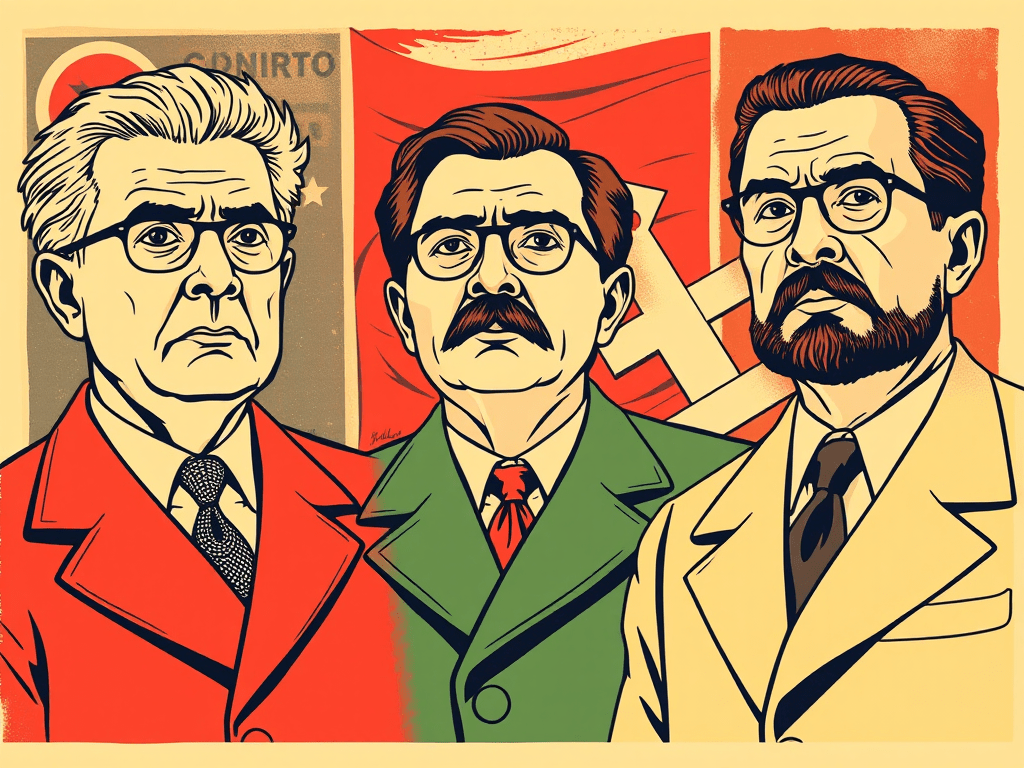
The Italian Communist Party (PCI), established in 1921, evolved from a revolutionary group to a significant democratic socialist force before dissolving in 1991. Key leaders like Gramsci and Berlinguer shaped its ideology, balancing Stalinist influences with democratic reforms. Its dissolution marked a pivotal transition in European politics, reflecting broader historical changes.
-

The Fourth of July, viewed through Marxist theory, symbolizes a bourgeois revolution that maintained class hierarchies and racial oppression rather than universal freedom. This critique highlights the contradictions between revolutionary rhetoric and capitalist realities, advocating for a radical reinterpretation of the holiday to connect it to ongoing struggles for collective liberation and economic justice.
-

Ulrike Meinhof, a German journalist and co-founder of the Red Army Faction, evolved from a respected intellectual to a revolutionary militant. Her radicalization, driven by disillusionment with traditional protest, led to violence justified by Marxist ideology. Arrested in 1972, Meinhof’s death in 1976 remains controversial, symbolizing state repression and revolutionary tragedy.
-

By Any Means Necessary, published by Pathfinder Press, is a powerful collection of Malcolm X’s writings that highlight his critique of racism and imperialism. It captures his political evolution towards a broader, anti-imperialist perspective. This volume serves as an essential text for understanding Black radicalism and ongoing struggles for social justice worldwide.
-

Rosa Luxemburg emphasized the “subjective factor” in Marxist theory, focusing on the working class’s consciousness and initiative as vital for revolutionary change. She opposed fatalistic views of history, arguing that active engagement and preparation of class consciousness are essential. The 1905 Russian Revolution demonstrated the necessity of this proactive approach for meaningful social transformation.
 Letters from Tomis