Philosophy
-
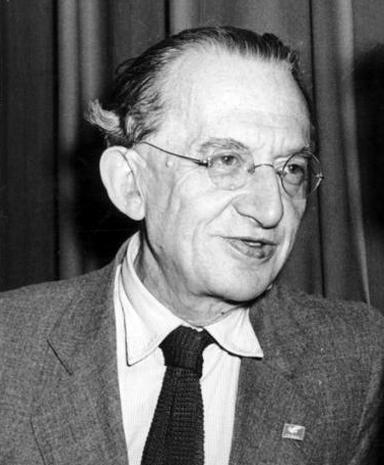
Georg Lukács, a prominent Hungarian Marxist philosopher, significantly influenced 20th-century Marxist theory with concepts like reification and class consciousness. His key works include “History and Class Consciousness,” where he explored the alienation of modernity. Engaging critically with Marxism, Lukács’s legacy informs contemporary debates on capitalism, alienation, and revolutionary change.
-

Boxing Day, the day after Christmas, symbolizes both charitable giving and consumerism, highlighting the contradictions of human nature. Despite its roots in generosity, it often devolves into a pursuit of material goods. This duality reflects our capacity for empathy and self-interest, making Boxing Day a day of complex significance and choices.
-

G.W.F. Hegel is a pivotal figure in philosophy, known for developing the dialectical method that emphasizes the dynamic interplay of contradictions as engines of progress. His ideas on history as a rational process and freedom tied to community shape modern thought. Hegel’s legacy influences various fields, demanding engagement with complexities rather than simplistic resolutions.
-

The content explores the philosophical concept of being in two places simultaneously through the lens of dialectical materialism. It argues this idea reflects humanity’s contradictions rather than a supernatural phenomenon. By examining labor, technology, and the nature of time, it emphasizes that existence is a dynamic interplay rather than fixed states, challenging metaphysical speculation.
-

Friedrich Engels’ Anti-Dühring critically examines Eugen Dühring’s theories while expounding Marxist thought. Through its structured approach, the book elucidates dialectical and historical materialism, addressing socialism’s scientific basis. Engaging and relevant, it has shaped socialist movements and offers essential insights into class struggle and societal transformation. A must-read for understanding socialism.
-

The text explores how accidents shape history, challenging the notion that monumental events are solely the result of deliberate actions or ideologies. It argues that small, chance occurrences often alter the course of nations, emphasizing that history is not linear but a complex interplay of chaos and contingency, making our choices significant.
-

Rosa Luxemburg’s Reform or Revolution, written in 1899, critiques revisionist socialism, emphasizing that reforms cannot resolve capitalism’s inherent contradictions. Luxemburg advocates for revolutionary action as essential for achieving social justice, presenting a thoughtful interplay between reform and revolution. Her passionate arguments urge a collective struggle for a world beyond capitalism.
-

The belief that history repeats itself oversimplifies the complexities of human experience. While patterns exist, history should be viewed as a spiral rather than a circle, shaped by human choices. Learning from past mistakes allows for progress and change, empowering humanity to carve new paths instead of reliving old errors.
-

The human spirit endures injustices but may erupt against minor affronts that symbolize deeper frustrations. Workplace indignities often catalyze rebellion, revealing collective strength. Small incidents crystallize everyday humiliations, igniting strikes as workers reclaim their dignity. These actions affirm worth and humanity, highlighting a fundamental truth about resistance against oppression.
-

In the tenth installment of reflections on What is Marxism by Sewell and Woods, Trotsky’s The ABC of Materialist Dialectics is praised for its clarity and passion. It connects philosophical concepts with class struggles, viewing contradictions as catalysts for change. Trotsky offers a dynamic approach to dialectics, urging critical thought and action for social transformation.
 Letters from Tomis