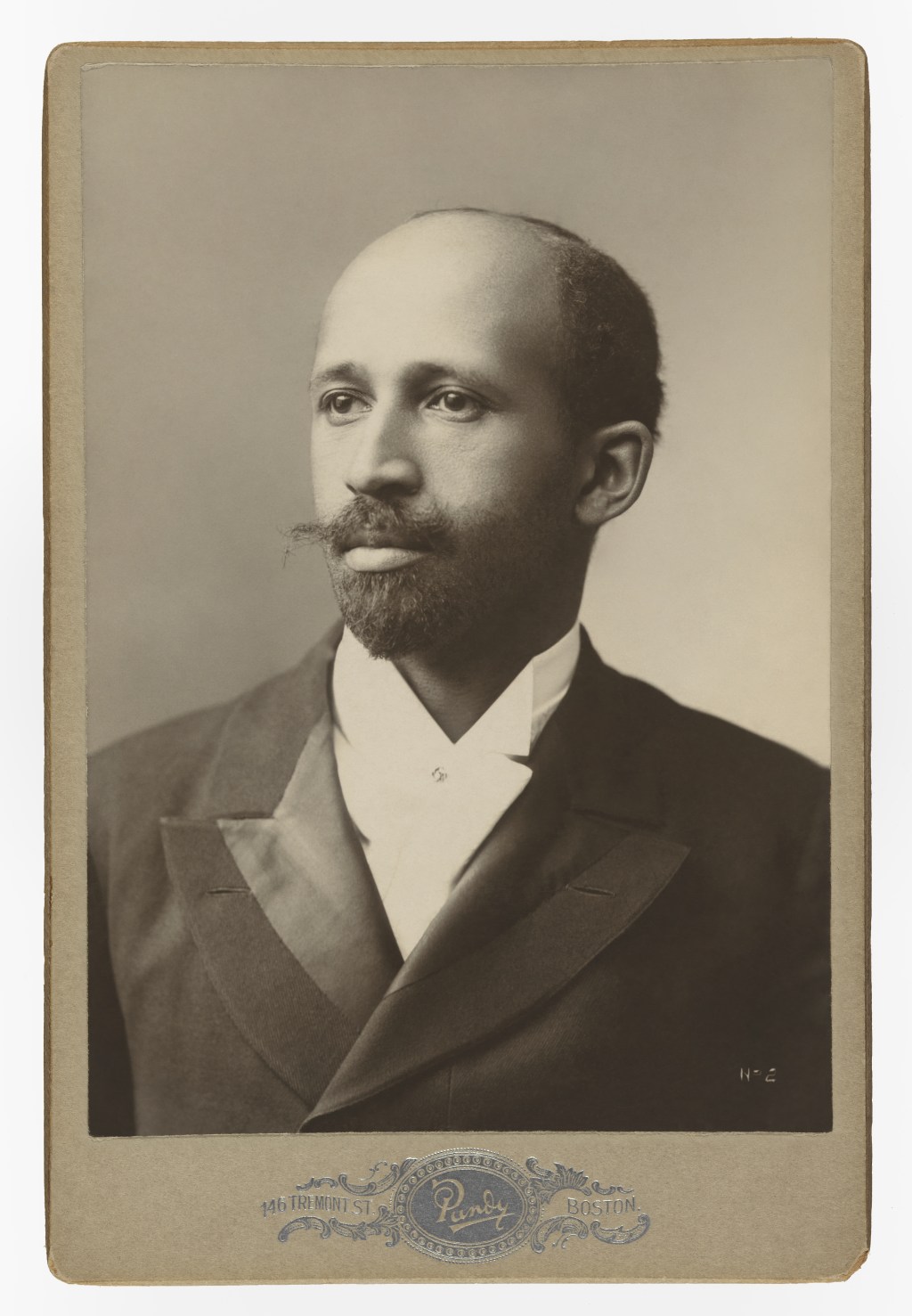
My Socialist Hall of Fame
During this chaotic era of vile rhetoric and manipulative tactics from our so-called bourgeois leaders, I am invigorated by the opportunity to reflect on Socialists, Revolutionaries, Philosophers, Guerrilla Leaders, Partisans, and Critical Theory titans, champions, and martyrs who paved the way for us—my own audacious “Socialism’s Hall of Fame.” These are my heroes and fore-bearers. Not all are perfect, or even fully admirable, but all contributed in some way to our future–either as icons to emulate, or as warnings to avoid in the future.
William Edward Burghardt Du Bois (February 23, 1868 – August 27, 1963) was a pioneering African American sociologist, historian, author, editor, and activist. He was born in Great Barrington, Massachusetts, to Alfred and Mary Silvina Burghardt Du Bois. His early experiences in a predominantly white community shaped his perspectives on race and society.
Du Bois attended Fisk University, a historically Black institution in Nashville, Tennessee, where he earned his bachelor’s degree in 1888. He continued his studies at Harvard University, obtaining a second bachelor’s degree in 1890 and becoming the first African American to earn a Ph.D. from Harvard in 1895. His doctoral dissertation, “The Suppression of the African Slave-Trade to the United States of America, 1638–1871,” was a significant contribution to historical scholarship.
In 1903, Du Bois published “The Souls of Black Folk,” a seminal collection of essays exploring the complexities of African American life and introducing the concept of “double consciousness,” describing the internal conflict experienced by subordinated groups in an oppressive society.
Du Bois was a co-founder of the National Association for the Advancement of Colored People (NAACP) in 1909 and served as the editor of its magazine, “The Crisis,” from 1910 to 1934. Through this platform, he advocated for civil rights, political representation, and the upliftment of African Americans.
Throughout his life, Du Bois was an advocate for Pan-Africanism, organizing several Pan-African Congresses to address the issues facing people of African descent worldwide. In his later years, disillusioned with the lack of progress in civil rights in the United States, he emigrated to Ghana in 1961, where he worked on the “Encyclopaedia Africana” project until his death in 1963.
Selected Bibliography:
• “The Suppression of the African Slave-Trade to the United States of America, 1638–1871” (1896)
• “The Philadelphia Negro: A Social Study” (1899)
• “The Souls of Black Folk” (1903)
• “John Brown” (1909)
• “The Negro” (1915)
• “Darkwater: Voices from Within the Veil” (1920)
• “Black Reconstruction in America” (1935)
• “Dusk of Dawn: An Essay Toward an Autobiography of a Race Concept” (1940)
• “The World and Africa” (1947)
• “In Battle for Peace: The Story of My 83rd Birthday” (1952)
Du Bois’s extensive body of work continues to influence discussions on race, sociology, history, and civil rights.
 Letters from Tomis
Leave a comment