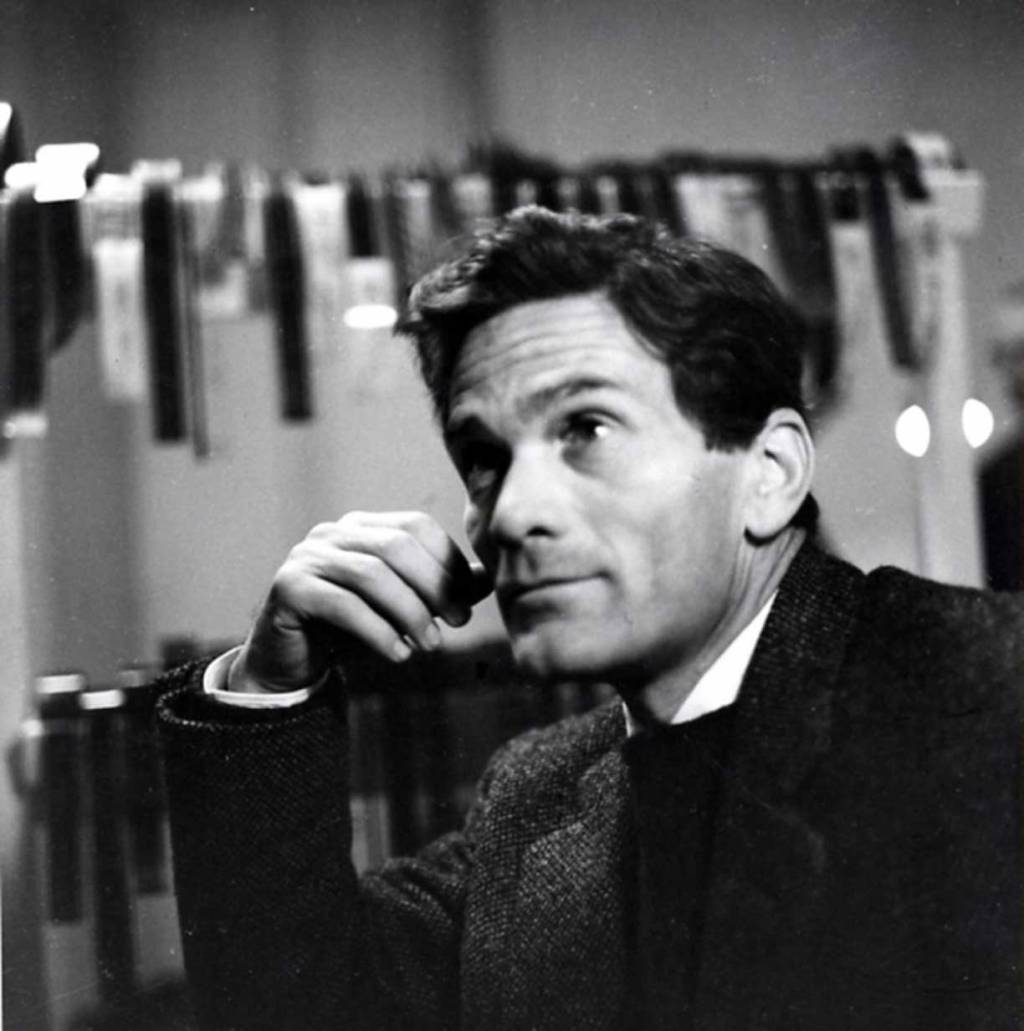
My Socialist Hall of Fame
During this chaotic era of vile rhetoric and manipulative tactics from our so-called bourgeois leaders, I am invigorated by the opportunity to reflect on Socialists, Revolutionaries, Philosophers, Guerrilla Leaders, Partisans, and Critical Theory titans, champions, and martyrs who paved the way for us—my own audacious “Socialism’s Hall of Fame.” These are my heroes and fore-bearers. Not all are perfect, or even fully admirable, but all contributed in some way to our future–either as icons to emulate, or as warnings to avoid in the future.
Any time you encounter one of Pier Paolo Pasolini’s films, you immediately know you are in the presence of a true visionary. His work delves deep into the human condition, challenging societal norms and provoking thought. I first saw “Salò” in a film theory class in the early nineties, a moment that irrevocably altered my understanding of cinema and its potential impact. The cinematic style is unapologetically raw, and Pasolini’s audacity in addressing taboo subjects left me both shocked and fascinated. His commitment to using art for social revolution and change inspired me then and has continued to resonate with me, prompting a lifelong exploration of how film can reflect and critique the world around us. Each viewing unveils layers of meaning, compelling viewers to confront uncomfortable truths about power, sexuality, and morality. It’s a testament to his genius that his work remains relevant today, urging new generations to recognize the power of art as a catalyst for discussion and transformation.
Early Life and Education
Pier Paolo Pasolini was born on March 5, 1922, in Bologna, Italy, into a family that frequently relocated due to his father’s military career. His mother, Susanna Colussi, was a schoolteacher from Casarsa della Delizia in Friuli, a region that would later influence Pasolini’s literary work. From a young age, Pasolini exhibited a profound interest in literature and the arts, writing poetry by the age of seven. He pursued higher education at the University of Bologna, studying art history and literature, where he immersed himself in the works of European literary figures and developed his own poetic voice.
Literary and Cinematic Career
Pasolini’s literary debut came with the publication of “Poesie a Casarsa” (1942), a collection of poems written in the Friulian dialect, reflecting his deep connection to the rural culture of his mother’s homeland. His novels, such as “Ragazzi di vita” (1955) and “Una vita violenta” (1959), offered unflinching portrayals of marginalized communities in post-war Italy, showcasing his commitment to social realism.
Transitioning to cinema in the early 1960s, Pasolini directed “Accattone” (1961), a film that depicted the life of a pimp in Rome’s slums, marking his entry into the Italian neorealist movement. He gained international acclaim with “Il Vangelo secondo Matteo” (“The Gospel According to St. Matthew,” 1964), noted for its austere portrayal of the life of Jesus Christ. His “Trilogy of Life,” comprising “Il Decameron” (1971), “I racconti di Canterbury” (“The Canterbury Tales,” 1972), and “Il fiore delle Mille e una Notte” (“Arabian Nights,” 1974), celebrated human sexuality and medieval literature. However, he later repudiated these works, criticizing the commodification of sex in contemporary society.
Pasolini’s final film, “Salò o le 120 giornate di Sodoma” (“Salò, or the 120 Days of Sodom,” 1975), stands as a harrowing critique of fascism and consumerism, transposing Marquis de Sade’s novel to the fascist Republic of Salò. The film’s explicit content and bleak outlook sparked significant controversy and debate.
Political Engagement and Controversies
An outspoken intellectual, Pasolini was a vocal critic of bourgeois values, capitalism, and the socio-political landscape of Italy. His Marxist beliefs often put him at odds with the establishment, and his open homosexuality challenged societal norms of the time. Throughout his career, he faced multiple obscenity charges and censorship, yet he remained steadfast in his critique of societal hypocrisies.
Death and Legacy
On November 2, 1975, Pasolini was brutally murdered in Ostia, near Rome, under circumstances that remain contentious and have fueled various conspiracy theories. His death shocked the nation and the world, highlighting the perils faced by those who challenge societal conventions.
Pasolini’s multifaceted oeuvre continues to influence contemporary literature, cinema, and critical thought. His fearless exploration of taboo subjects and his critique of modernity resonate with ongoing discussions about the role of the artist in society.
Selected Bibliography
Poetry:
• “Poesie a Casarsa” (1942)
Novels:
• “Ragazzi di vita” (1955)
• “Una vita violenta” (1959)
Essays:
• “Empirismo eretico” (1972)
Films:
• “Accattone” (1961)
• “Mamma Roma” (1962)
• “Il Vangelo secondo Matteo” (1964)
• “Il Decameron” (1971)
• “Salò o le 120 giornate di Sodoma” (1975)
Pasolini’s enduring impact on culture and thought underscores the power of art to confront and question societal norms, inspiring generations to engage critically with the world around them.
 Letters from Tomis
Leave a comment