My Socialist Hall of Fame
During this chaotic era of vile rhetoric and manipulative tactics from our so-called bourgeois leaders, I am invigorated by the opportunity to reflect on Socialists, Revolutionaries, Philosophers, Guerrilla Leaders, Partisans, and Critical Theory titans, champions, and martyrs who paved the way for us—my own audacious “Socialism’s Hall of Fame.” These are my heroes and fore-bearers. Not all are perfect, or even admirable, but all contributed in some way to our future–either as icons to emulate, or as warnings to avoid in the future.
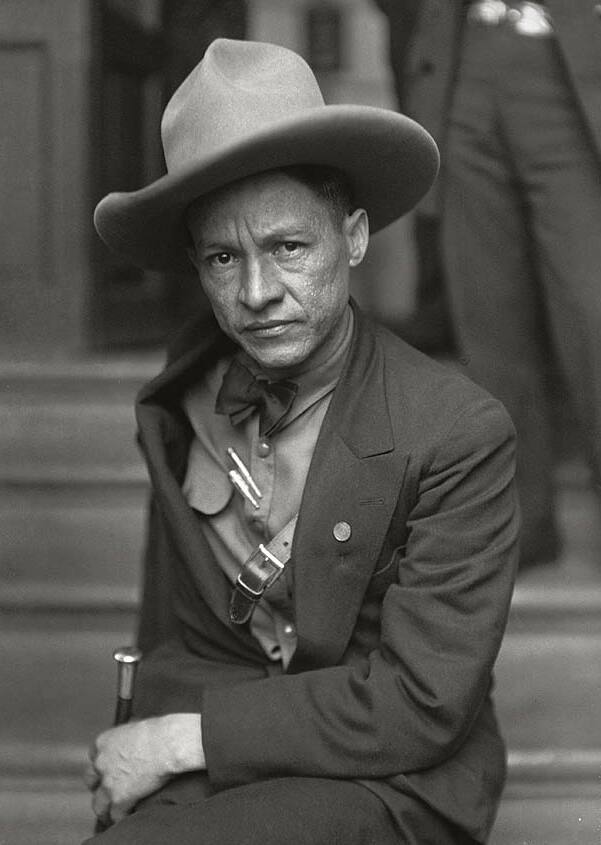
Growing up in the imperialist metropole, I had never heard of Augusto Sandino other than through his namesakes, the Sandinistas of Nicaragua, who emerged with fervor during the tumultuous 1980s. The US educational system works hard to not talk about these revolutionaries or their martydoms, conveniently glossing over an important chapter in history that reflects the struggles of those fighting against imperial oppression.
Recently, I discovered a wealth of information about Sandino and his legacy from Jacobin Radio’s podcast the Dig: Oligarchy, Empire and Revolution with Hilary Goodfriend and Jorge Cuéllar. This insightful podcast dives deep into the intricacies of US involvement in Central America, exploring how the echoes of imperialism have shaped the political landscape of the region. I found it to be a compelling resource, filled with thought-provoking discussions that shed light on the factors contributing to the rise of revolutionary movements and the ongoing impact of colonial attitudes. I highly recommend it to anyone seeking to learn more about the US’s long history in Central America and the influential figures who dared to stand against overwhelming odds for their people’s rights.
Early Life
Augusto Nicolás Calderón Sandino was born on May 18, 1895, in Niquinohomo, Masaya Department, Nicaragua. He was the illegitimate son of Gregorio Sandino, a small landowner, and Margarita Calderón, a domestic worker. Raised primarily by his mother, Sandino experienced poverty and social marginalization, which influenced his later revolutionary ideals.
Path to Revolution
In 1921, after a personal altercation with a prominent Conservative figure, Sandino fled to Mexico, where he was exposed to revolutionary ideologies and the Mexican labor movement. He returned to Nicaragua in 1926, amid political turmoil, and joined the Liberal rebellion against the Conservative government, which was supported by U.S. military forces.
Guerrilla Warfare Against U.S. Occupation
Rejecting the U.S.-brokered peace agreement in 1927, Sandino retreated to the northern mountains of Nicaragua, where he organized the “Army in Defense of the National Sovereignty of Nicaragua” (Ejército Defensor de la Soberanía Nacional de Nicaragua, or EDSN). He led a guerrilla campaign against U.S. Marines and Nicaraguan government forces, becoming a symbol of resistance to foreign intervention throughout Latin America.
Assassination and Legacy
After the U.S. Marines withdrew in 1933, Sandino negotiated a peace agreement with Nicaraguan President Juan Bautista Sacasa. However, on February 21, 1934, he was assassinated on the orders of National Guard commander Anastasio Somoza García, who later established a dictatorial regime. Sandino’s legacy endured, inspiring the Sandinista National Liberation Front (FSLN), which overthrew the Somoza dynasty in 1979.
Bibliography
1. Selser, Gregorio. Sandino. New York: Monthly Review Press, 1981.
2. Bermann, Karl. Sandino Without Frontiers: Selected Writings of Augusto César Sandino on Internationalism, Pan-Americanism, and Social Questions. Durham: Duke University Press, 1990.
3. Bendaña, Alejandro. Sandino: Patria y Libertad. Managua: Editorial Nueva Nicaragua, 1995.
4. Navarro-Genie, Marco Aurelio. Augusto “César” Sandino: Messiah of Light and Truth. Syracuse: Syracuse University Press, 2002.
5. Macaulay, Neill. The Sandino Affair. Chicago: Quadrangle Books, 1967.
6. Bermann, Karl. Sandino: The Testimony of a Nicaraguan Patriot, 1921–1934. Princeton: Princeton University Press, 1990.
Sandino’s unwavering resistance against foreign intervention and his commitment to national sovereignty have solidified his status as a national hero in Nicaragua and a symbol of anti-imperialism worldwide.
 Letters from Tomis
Leave a comment