reflections
-

Rosa Luxemburg’s pamphlet Reform or Revolution (1899) critiques Eduard Bernstein’s revisionism within the SPD, arguing that socialism cannot be achieved through gradual reforms. She emphasizes the necessity of revolution due to capitalism’s inherent contradictions. This work later influenced revolutionary socialism and highlighted Luxemburg’s enduring opposition to reformism and centralism within socialist movements.
-

The content critiques the modern bourgeoisie’s self-congratulatory belief that capitalism has evolved beyond Marxist exploitation. It illustrates how constant capital, represented by technology, relies on variable capital—human labor. Despite advancements, the fundamental dynamics of exploitation persist, with labor often obscured in narratives of innovation and progress, revealing Marx’s insights remain relevant today.
-

Lenin’s “Testament” warned against Stalin, advocating his removal as General Secretary, yet it was suppressed by Stalin and allies like Zinoviev and Kamenev. Disunity among Lenin’s potential successors, internal divisions, and Stalin’s control over party machinery enabled him to consolidate power, ultimately silencing his rivals and becoming the Soviet leader.
-

Marxist thought delineates between productive and unproductive labor, clarifying that productive labor creates surplus value for capital, while unproductive labor merely redistributes wealth. This analysis reveals the exploitation inherent in capitalism. Understanding these distinctions provides clarity and a path to reclaiming labor’s humanity amidst capitalist structures, illuminating a potential for transformation.
-
Lenin’s “Testament” warned against Stalin, advocating his removal as General Secretary, yet it was suppressed by Stalin and allies like Zinoviev and Kamenev. Disunity among Lenin’s potential successors, internal divisions, and Stalin’s control over party machinery enabled him to consolidate power, ultimately silencing his rivals and becoming the Soviet leader.
-

Frederic Jameson, born in 1934, is a prominent Marxist literary critic known for his theories on postmodernism and capitalism. He taught at various prestigious institutions, notably Duke University. His notable works include Postmodernism, or, The Cultural Logic of Late Capitalism and The Political Unconscious, analyzing the intersections of culture and economics.
-

Karl Marx’s theory of labor-power and wages is often misunderstood, obscured by capitalism’s need to mask economic realities. He distinguishes labor-power from labor, highlighting how workers are paid only for reproducing their capacity to work, not for the true value produced. This system leads to surplus value extraction and worker exploitation. Marx argues for the…
-

The true essence of Marxism lies in class consciousness rather than violence. It emphasizes organized collective action and awareness of exploitation, leading to a rational societal transformation. Though historical revolutions involved violence, Marxism fundamentally seeks dignity and the reconfiguration of society by empowering the working class to recognize its value and solidarity.
-

The text critiques the utility theory of value, arguing it diverts attention from the exploitative nature of capitalism by attributing worth to individual preference rather than labor. In contrast, the Marxist labor theory emphasizes value as determined by socially necessary labor time, revealing capitalism as a system that extracts wealth, not generates it.
-
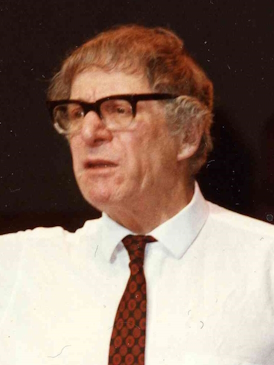
Ted Grant (1913–2006) was a prominent British Marxist and Trotskyist theorist, known for his activism in the UK labor movement. He advocated for entryism within the Labour Party and founded the Militant Tendency, influencing local councils. Expelled in 1992, he established Socialist Appeal and continued to promote Marxist ideas until his death.
 Letters from Tomis