reflections
-
For those brave souls that have journeyed with me over the last year or so, I say thank you wholeheartedly. Your support and engagement have been invaluable. Over the last months, I have diligently published my backlog of essays to this blog on a daily basis, each piece carefully crafted with the intention of shedding
-

The Fourth of July, viewed through Marxist theory, symbolizes a bourgeois revolution that maintained class hierarchies and racial oppression rather than universal freedom. This critique highlights the contradictions between revolutionary rhetoric and capitalist realities, advocating for a radical reinterpretation of the holiday to connect it to ongoing struggles for collective liberation and economic justice.
-

Contemporary Marxist theorists envision a democratic, participatory socialist planned economy focused on human needs rather than profit. With technology facilitating coordination without markets, resources are allocated through collective decision-making, emphasizing ecological sustainability and social welfare. This approach fosters empowerment, equality, and genuine democracy, seeking to reshape society for a more just future.
-

Karl Marx’s economic theories emphasize class struggle as the driving force behind societal change and historical evolution. Central concepts include the labor theory of value, surplus value, and historical materialism, which illustrate the antagonistic relationship between the bourgeoisie and proletariat. This conflict reflects broader socio-economic dynamics, ultimately predicting a revolutionary transition towards socialism and communism.
-
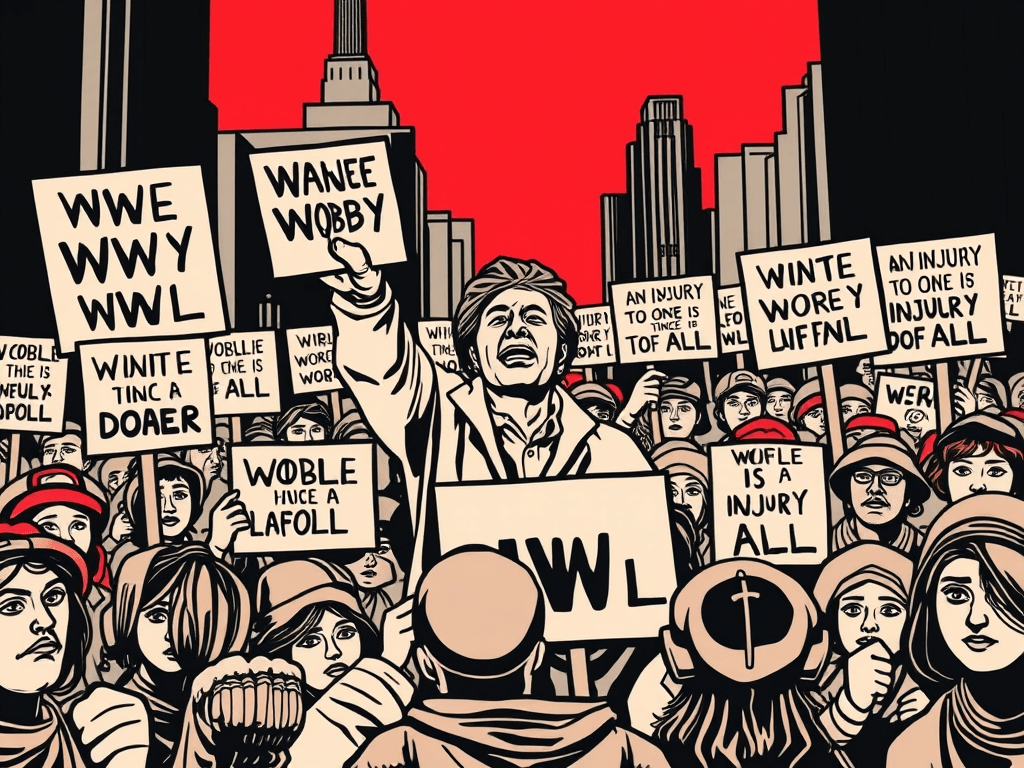
The Industrial Workers of the World (IWW), founded in 1905, championed radical labor rights against the conservative American Federation of Labor. Known as “Wobblies,” they aimed to unite all workers under “One Big Union.” Despite severe repression, their cultural impact and legacy of revolutionary activism continue to inspire modern labor movements.
-
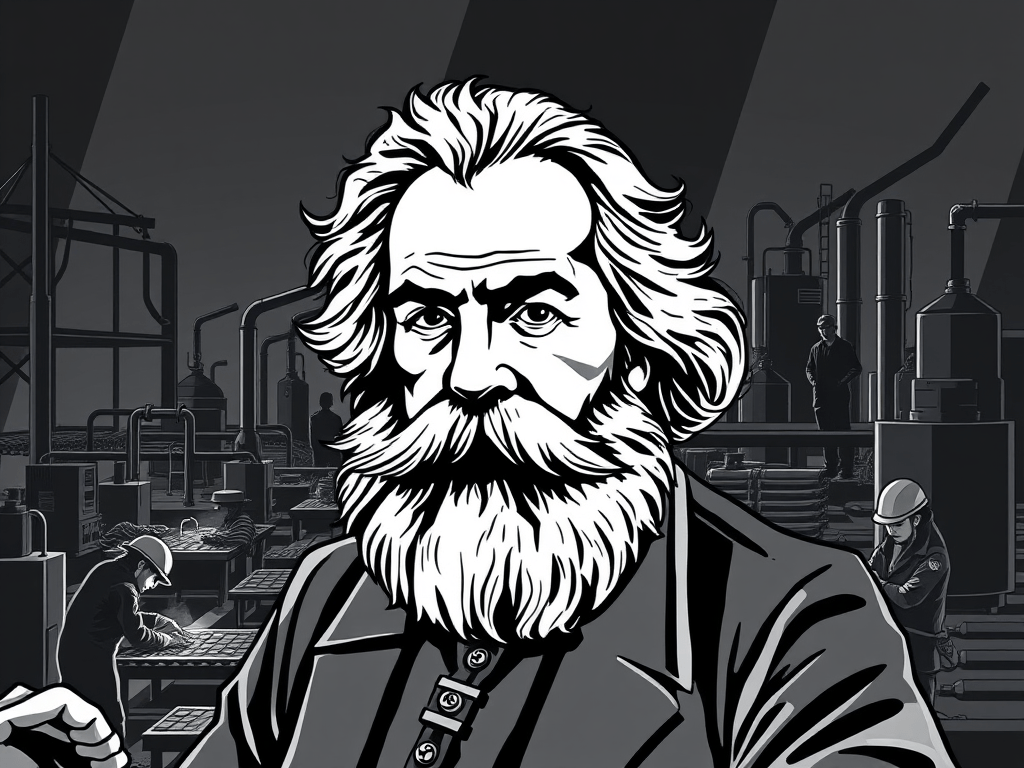
Marxist economic theory critiques capitalism by revealing systemic contradictions that lead to recurring crises. Central to this theory is surplus value, where workers’ labor generates profit for capitalists. The tendency of profit rates to fall exacerbates overproduction and underconsumption, creating inevitable economic downturns, indicating capitalism’s inherent instability and crisis-prone nature.
-

The content explores how capitalism distorts human labor into abstract value through Karl Marx’s labor theory of value. It differentiates between absolute and relative surplus value, highlighting methods of exploitation. Marx’s insights reveal value as socially constructed, influenced by class struggle rather than individual preference, challenging the foundations of capitalist society.
-
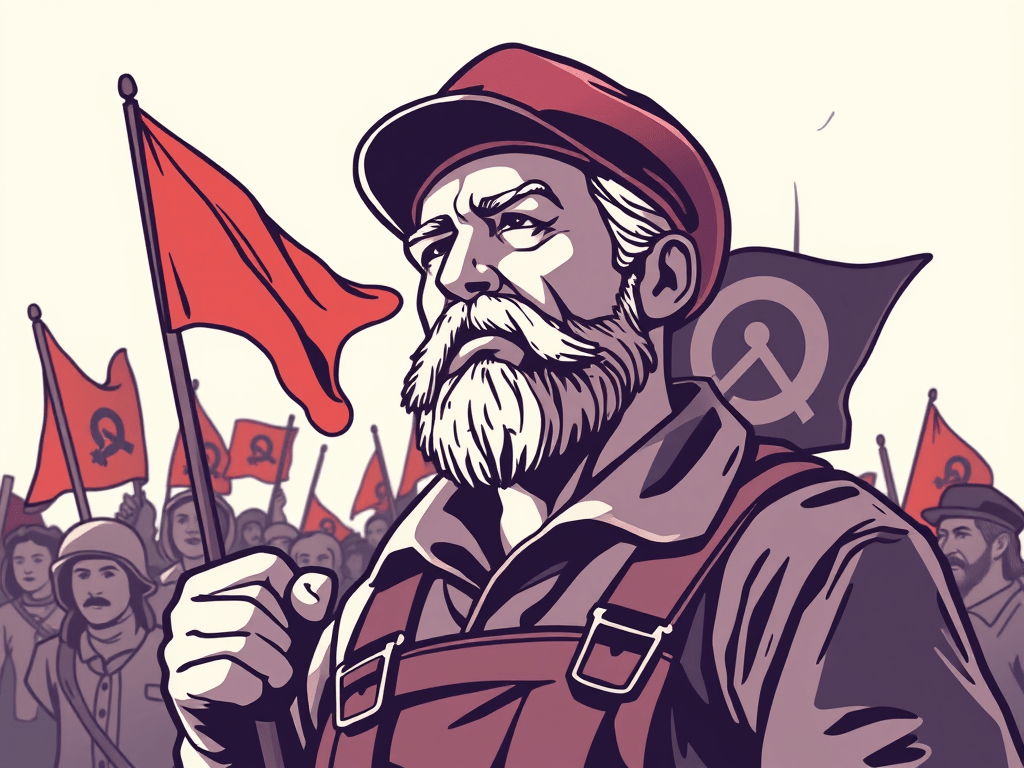
May Day embodies a complex legacy of worker celebration and exploitation, reflecting capitalism’s duality. While historically significant, it demands scrutiny rather than reverence. For Marxists, it symbolizes the struggle for dignity, freedom, and the right to leisure, urging contemporary society to confront who benefits from labor. This reckoning preserves its revolutionary promise.
-
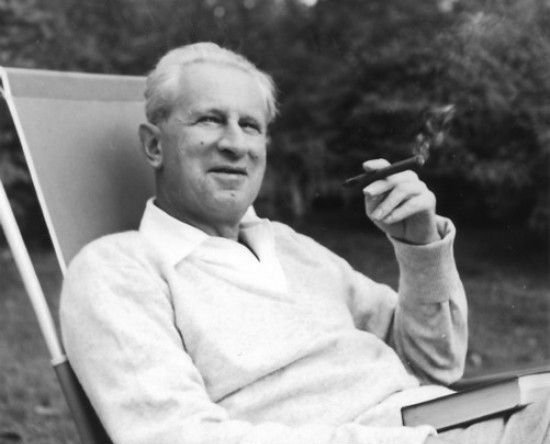
Herbert Marcuse, a German-American philosopher linked to the Frankfurt School, critiqued capitalist societies using Marxist and psychoanalytic theories. Influenced by Heidegger, he fled Nazism and gained fame in the 1960s with One-Dimensional Man, advocating for radical change. Marcuse’s work focused on ideological control, culture, and liberation until his death in 1979.
-

The text explores Marx’s theory of surplus value, asserting that profit under capitalism originates solely from labor. Marx critiques classical economics for failing to explain profit, emphasizing that surplus arises in production rather than circulation. By highlighting the exploitation of labor, he reveals how capital accumulates wealth through unpaid worker contributions.
 Letters from Tomis