Marxism
-

Hosea Hudson (1898–1988) was a significant African American Communist leader and labor activist in the mid-20th century. His life highlights the intersection of race, class, and political radicalism. Despite facing repression, he organized Black workers and contributed to labor movements, leaving a legacy that connects Black struggle to broader socialist politics.
-

Frederic Jameson’s Postmodernism examines late capitalism’s cultural dynamics, identifying postmodernism as a critical ideological manifestation. While praised for its historical materialism, it lacks a revolutionary praxis, offering diagnostics instead of solutions. Jameson emphasizes the need for cognitive mapping but fails to connect these ideas with grassroots political action, ultimately serving as a theoretical lens rather…
-

Benjamin Jefferson Davis Jr. (1903–1964) was an influential African American lawyer and Communist activist who served on the New York City Council. His legal work challenged Jim Crow laws, and he became prominent in leftist politics. Convicted under the Smith Act, Davis continued advocating for civil rights until his death, leaving a significant legacy.
-
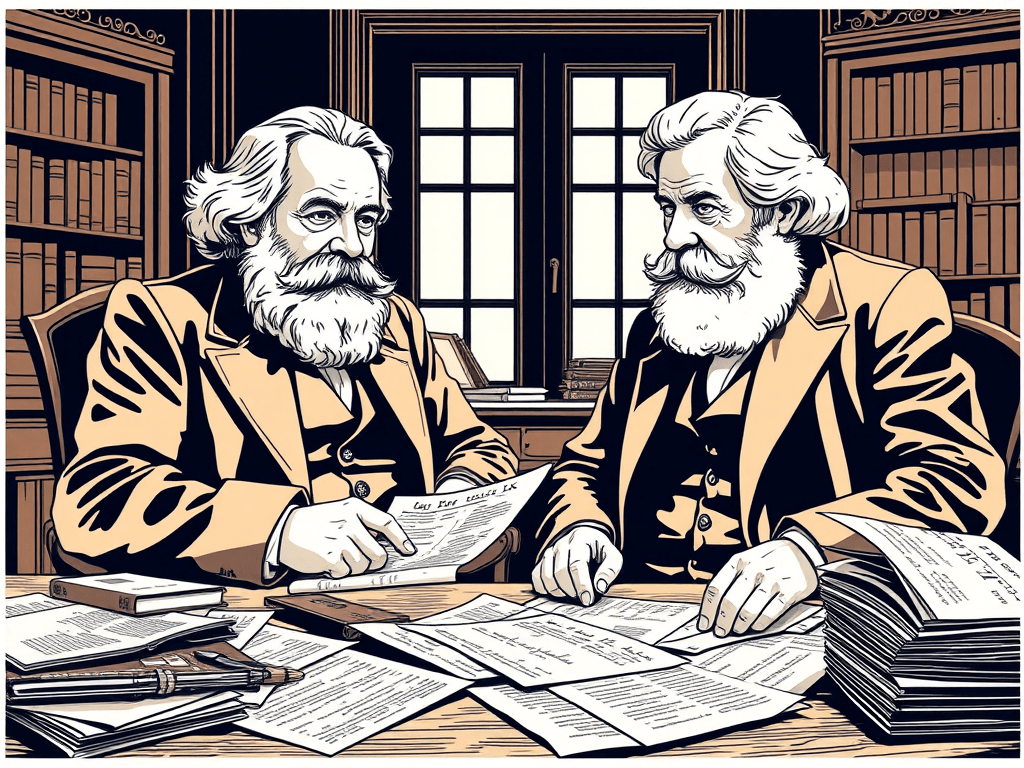
“The Civil War in the United States,” edited by Andrew Zimmerman, is a foundational Marxist analysis by Marx and Engels of the American Civil War, emphasizing class struggle. It offers insights into the war’s implications for international working-class movements and cautions against sectarianism, advocating for solidarity and concrete analysis amid bourgeois-democratic struggles.
-

Cedric James Robinson (1940–2016) was a pivotal political theorist and scholar whose work transformed the study of race, capitalism, and political thought. Notable for developing Black Marxism and the Black Radical Tradition, his contributions challenged Eurocentric narratives, emphasizing African cultural epistemologies and the intertwined nature of racial and economic oppression.
-

Howard Zinn, born in 1922 to immigrant parents, became a prominent historian and activist after experiencing poverty and injustice. He taught at Spelman College and Boston University, focusing on civil rights and antiwar movements. His influential book, A People’s History of the United States, reshaped historical perspectives, emphasizing marginalized voices. Zinn’s legacy endures through ongoing…
-

Structural Marxism emerged in the 1960s, critiquing Stalinist economism and humanist Marxism through thinkers like Althusser and Poulantzas, who emphasized social structures’ supremacy over individual agency. Their theories on ideology, state, and class struggle remain relevant today, informing analyses of modern capitalism and emphasizing the significance of ideological apparatuses and class relations.
-
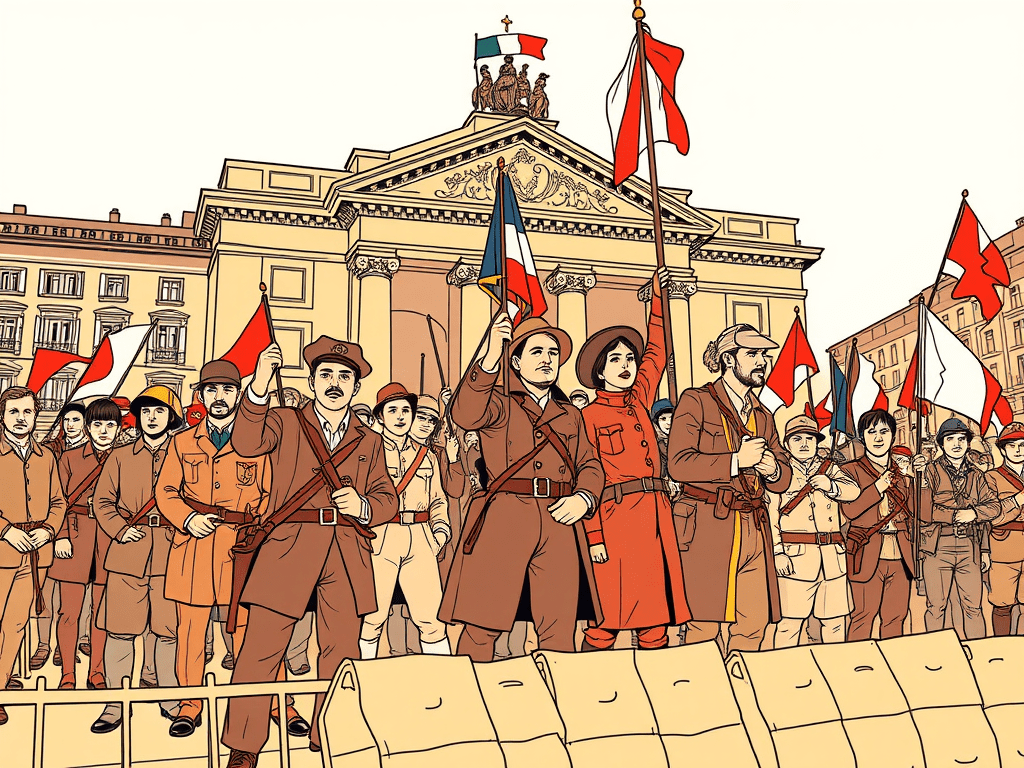
The Paris Commune of 1871 was a pivotal workers’ uprising that resulted in a revolutionary government led by laborers and radicals. Lasting only two months, it implemented radical reforms like council democracy and social welfare. Although brutally suppressed, its legacy continues to inspire socialist movements, illustrating the potential for proletarian self-governance and revolutionary action.
-

Fred Hampton was a pivotal leader of the Black Panther Party, advocating for Black liberation and anti-capitalist solidarity. His assassination at 21 by the U.S. government highlighted the threat he posed to systemic injustice. Hampton’s legacy inspires contemporary movements, emphasizing grassroots organizing and cross-racial coalition building against oppression.
-

The Fourth of July, viewed through Marxist theory, symbolizes a bourgeois revolution that maintained class hierarchies and racial oppression rather than universal freedom. This critique highlights the contradictions between revolutionary rhetoric and capitalist realities, advocating for a radical reinterpretation of the holiday to connect it to ongoing struggles for collective liberation and economic justice.
 Letters from Tomis