Lectures
-

The lecture critiques finance as a central pillar of capitalism, extracting value rather than producing. It traces financial capital’s evolution, highlighting Marx, Engels, and Lenin’s analyses of its role in global exploitation and class struggle. To dismantle capitalism, it argues for abolishing finance, rejecting reform, and empowering workers through organized resistance.
-

Caio Dezorzi’s article critiques the UN’s MINUSTAH mission in Haiti, portraying it as an imperialist intervention that continues to undermine Haiti’s sovereignty since 1804. The analysis details political crises, foreign control, and the rise of gangs from 2015 to 2025, emphasizing the need for a revolutionary movement to combat imperialist exploitation.
-

The text discusses the political essence of financial capital, emphasizing its role in perpetuating capitalism and imperialism. It highlights key insights from Marx, Engels, and Lenin, illustrating how finance acts as a weapon for the bourgeoisie and fuels global inequality. The conclusion advocates for revolutionary action to dismantle finance capital’s oppressive structures.
-

The lecture analyzes China’s transition from a socialist economy to capitalism, emphasizing the rise of a newly proletarian class amidst capitalist inequalities and ecological challenges. The Chinese Communist Party, now resembling a bourgeois entity, faces potential revolutionary upheaval as tensions mount, with predictions of significant social and political crises ahead.
-

The content analyzes China’s economic transformation from the late 1970s to the early 2000s, focusing on capitalist restoration under bureaucratic leadership. Key themes include the role of the Communist Party in this transition, the decline of worker rights, and the emergence of capitalism, culminating in China’s integration into the global capitalist system by 2001.
-

The lecture on “The Communist Manifesto” emphasizes its historical significance and ongoing relevance in contemporary discourse. It explores the text’s insights on capitalism, class struggle, and Marxist theory, alongside a critique of its predictions and enduring themes such as alienation and inequality in today’s global economy.
-
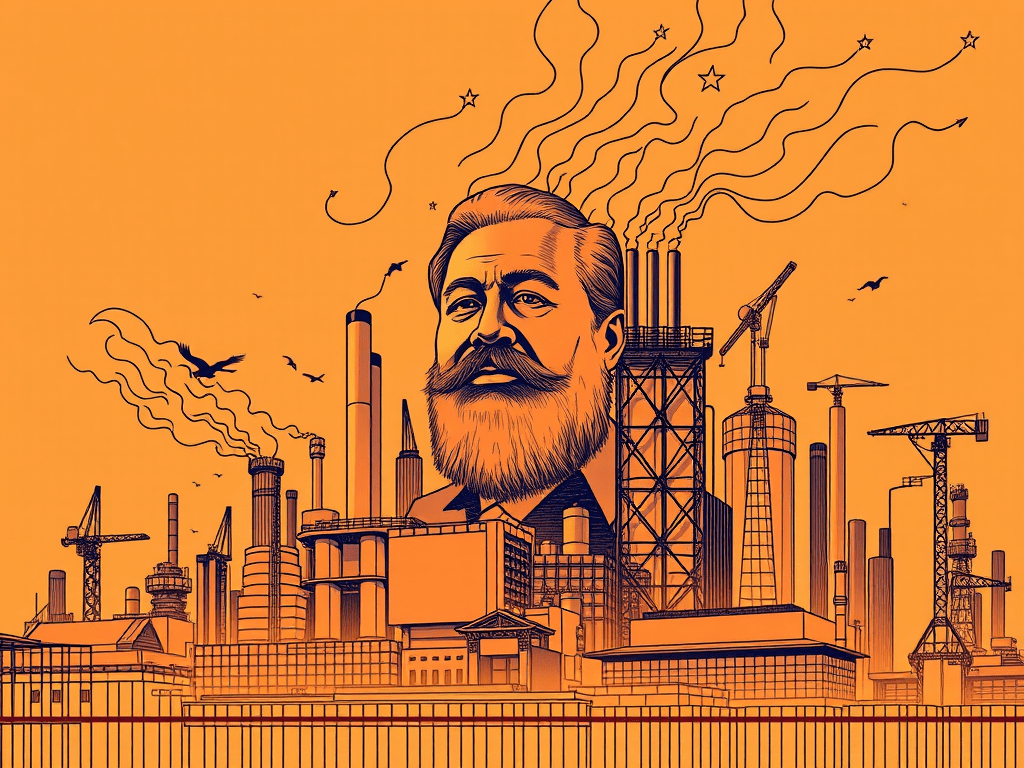
Lecture Short lecture based on Fred Weston’s article: https://marxist.com/new-chinese-translation-of-china-from-permanent-revolution-to-counter-revolution-available-now.htm Lecture Overview Today’s lecture explores Fred Weston’s Marxist analysis of China’s political and economic transformation from a revolutionary workers’ state to a capitalist imperialist power. This text serves as a preface to the Chinese translation of China: From Permanent Revolution to Counter-Revolution, and offers a panoramic…
-

Ted Grant’s Marxist analysis of capitalist economic cycles in “Will There Be A Slump?” highlights that capitalism is subject to inherent contradictions leading to recurring crises. He examines post-World War II economic upswing, overproduction, and the temporary nature of state interventions and nationalizations, illustrating the persistent instability and inequality in global capitalism.
-

Rosa Luxemburg’s “Reform or Revolution” critiques Eduard Bernstein’s view that socialism can be achieved through gradual reforms. She asserts that capitalism is inherently unstable and exploitative, requiring revolutionary action instead. Although reforms can improve conditions, they do not resolve capitalism’s contradictions, emphasizing the need for class struggle and systemic change.
-
Rosa Luxemburg’s “Reform or Revolution” critiques Eduard Bernstein’s revisionist socialism, arguing that social revolution is essential for achieving socialism, as reforms alone cannot address capitalism’s inherent contradictions. She emphasizes class struggle and warns against the dangers of reformism, asserting that only a proletarian revolution can fundamentally transform society and abolish exploitation.
 Letters from Tomis