-

The Feast of the Holy Innocents, observed on December 28th, commemorates the alleged massacre of infants by King Herod in Bethlehem. While presented as a martyrdom narrative in Christianity, historical evidence of such an event is lacking. This feast reflects a troubling tendency to glorify suffering and trivialize human pain in Christian thought.
-
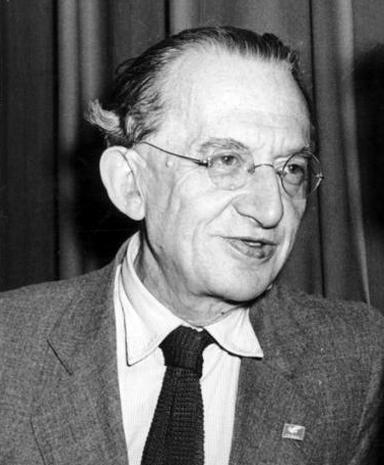
Georg Lukács, a prominent Hungarian Marxist philosopher, significantly influenced 20th-century Marxist theory with concepts like reification and class consciousness. His key works include “History and Class Consciousness,” where he explored the alienation of modernity. Engaging critically with Marxism, Lukács’s legacy informs contemporary debates on capitalism, alienation, and revolutionary change.
-

Boxing Day, the day after Christmas, symbolizes both charitable giving and consumerism, highlighting the contradictions of human nature. Despite its roots in generosity, it often devolves into a pursuit of material goods. This duality reflects our capacity for empathy and self-interest, making Boxing Day a day of complex significance and choices.
-

Wishing friends and family a Merry Christmas and a Happy Hanukkah! May this joyful season bring warmth, love, and beautiful memories. Whether lighting the menorah or decorating the tree, may peace and blessings fill your days. Here’s to kindness, hope, and a bright New Year ahead!
-

Christmas has evolved from its religious roots into a secular celebration, characterized by commercialism and human connection. While it emphasizes joy and generosity, it also reflects societal contradictions, highlighting issues like poverty. Ultimately, the secular Christmas champions shared humanity, fostering inclusivity and resilience, making it a holiday that transcends traditional beliefs.
-

G.W.F. Hegel is a pivotal figure in philosophy, known for developing the dialectical method that emphasizes the dynamic interplay of contradictions as engines of progress. His ideas on history as a rational process and freedom tied to community shape modern thought. Hegel’s legacy influences various fields, demanding engagement with complexities rather than simplistic resolutions.
-

Rosa Luxemburg, a prominent Marxist revolutionary, fought for socialism during the turbulent early 20th century. Born in Poland, she became an influential theorist in Germany, opposing capitalism and militarism. Her life was marked by activism, imprisonment, and ultimately assassination in 1919. Luxemburg’s ideas continue to inspire social justice movements today.
-

The content explores the philosophical concept of being in two places simultaneously through the lens of dialectical materialism. It argues this idea reflects humanity’s contradictions rather than a supernatural phenomenon. By examining labor, technology, and the nature of time, it emphasizes that existence is a dynamic interplay rather than fixed states, challenging metaphysical speculation.
-
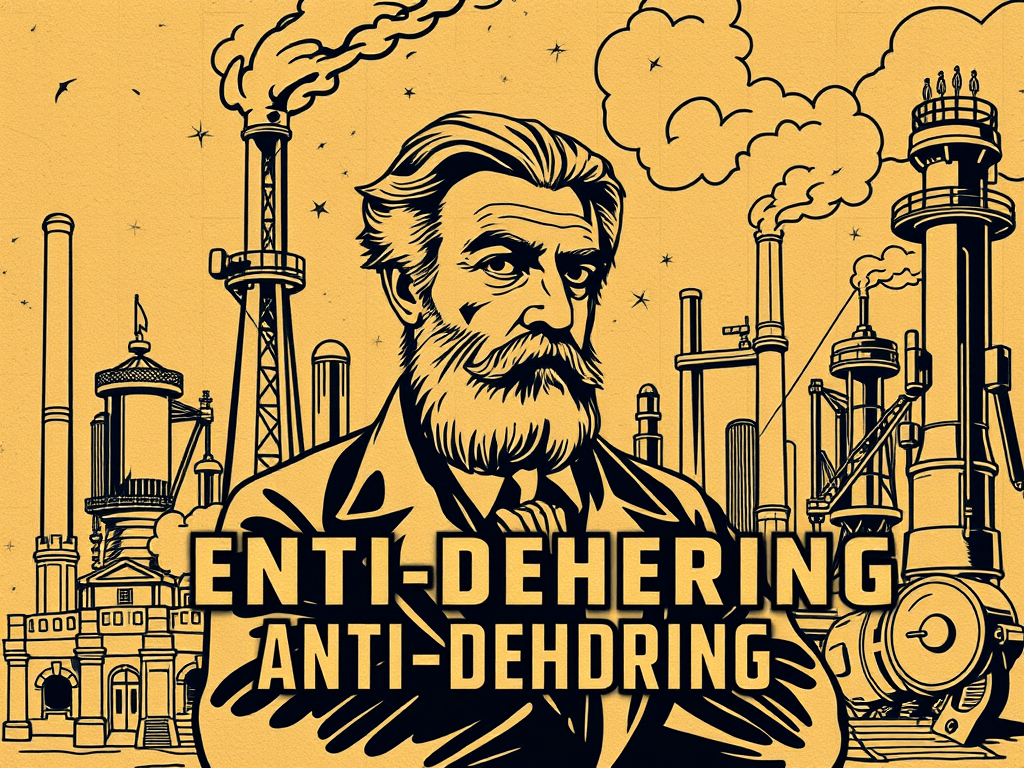
Friedrich Engels’ Anti-Dühring critically examines Eugen Dühring’s theories while expounding Marxist thought. Through its structured approach, the book elucidates dialectical and historical materialism, addressing socialism’s scientific basis. Engaging and relevant, it has shaped socialist movements and offers essential insights into class struggle and societal transformation. A must-read for understanding socialism.
-

The text explores how accidents shape history, challenging the notion that monumental events are solely the result of deliberate actions or ideologies. It argues that small, chance occurrences often alter the course of nations, emphasizing that history is not linear but a complex interplay of chaos and contingency, making our choices significant.
-
Subscribe
Subscribed
Already have a WordPress.com account? Log in now.
 Letters from Tomis