-

Money is a complex and misunderstood artifact, seen as a mere facilitator of trade yet deeply intertwined with alienation and exploitation. Marx critiques its role as a commodity that masks social relations and perpetuates inequality. Rather than a neutral tool, money embodies estrangement and fuels capitalist predation, necessitating a reevaluation of its societal status.
-

Rosa Luxemburg’s pamphlet Reform or Revolution (1899) critiques Eduard Bernstein’s revisionism within the SPD, arguing that socialism cannot be achieved through gradual reforms. She emphasizes the necessity of revolution due to capitalism’s inherent contradictions. This work later influenced revolutionary socialism and highlighted Luxemburg’s enduring opposition to reformism and centralism within socialist movements.
-

The content critiques the modern bourgeoisie’s self-congratulatory belief that capitalism has evolved beyond Marxist exploitation. It illustrates how constant capital, represented by technology, relies on variable capital—human labor. Despite advancements, the fundamental dynamics of exploitation persist, with labor often obscured in narratives of innovation and progress, revealing Marx’s insights remain relevant today.
-
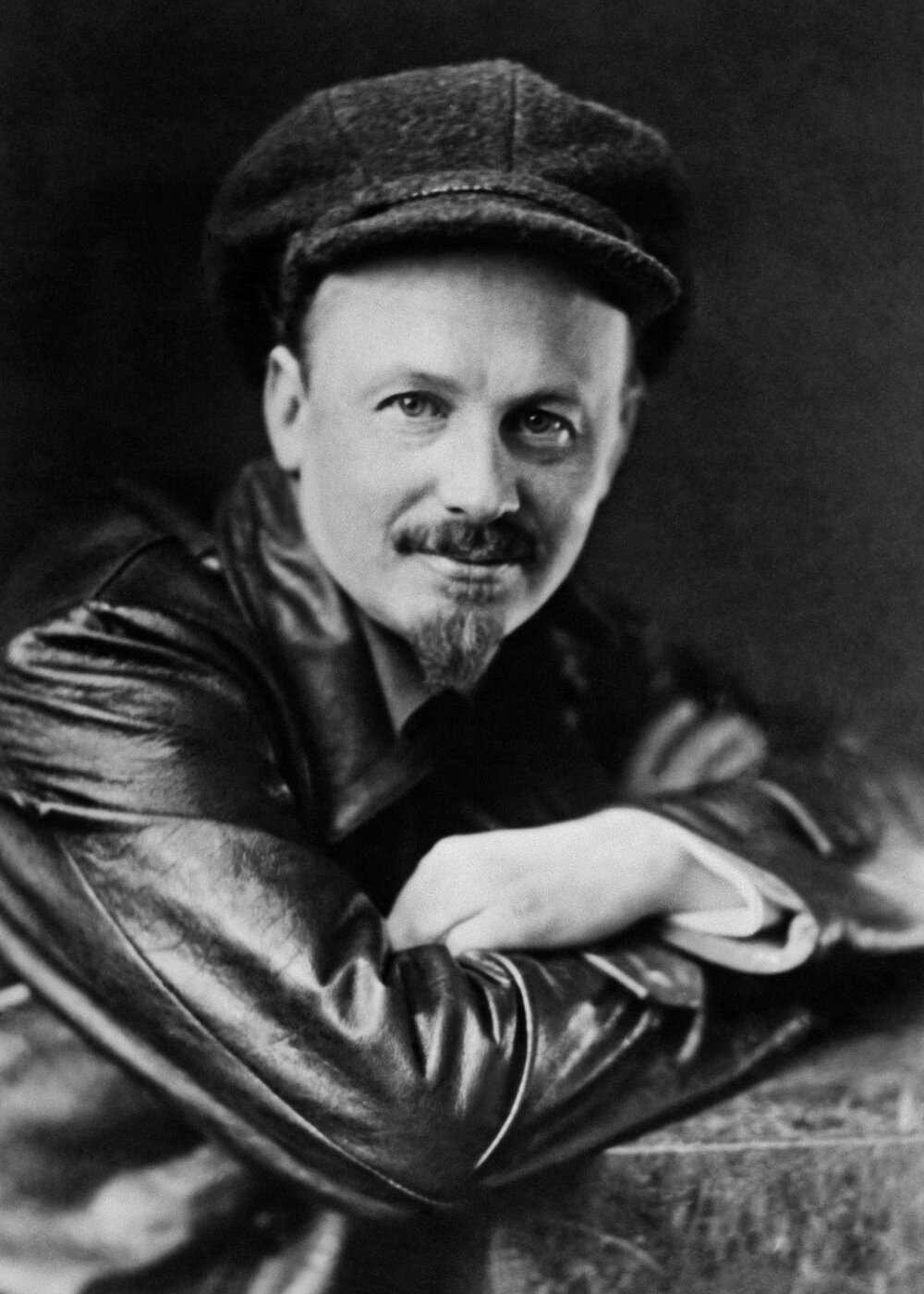
Nikolai Bukharin (1888–1938) was a leading Bolshevik revolutionary, Marxist theorist, and Soviet politician. Initially influential during the October Revolution and supporter of the New Economic Policy, he fell out of favor with Stalin, leading to his arrest and execution during the Great Purge. His legacy endures in Marxist studies.
-

The “History of the Communist Party of the Soviet Union (Bolsheviks): Short Course,” overseen by Stalin, offers a biased, simplified narrative of Bolshevik history. While it serves as a doctrinal tool that shaped Soviet ideology and political thought, it lacks academic rigor and distorts historical facts to reinforce Stalin’s regime.
-
Rosa Luxemburg’s “Reform or Revolution” critiques Eduard Bernstein’s view that socialism can be achieved through gradual reforms. She asserts that capitalism is inherently unstable and exploitative, requiring revolutionary action instead. Although reforms can improve conditions, they do not resolve capitalism’s contradictions, emphasizing the need for class struggle and systemic change.
-

Lenin’s “Testament” warned against Stalin, advocating his removal as General Secretary, yet it was suppressed by Stalin and allies like Zinoviev and Kamenev. Disunity among Lenin’s potential successors, internal divisions, and Stalin’s control over party machinery enabled him to consolidate power, ultimately silencing his rivals and becoming the Soviet leader.
-

Marxist thought delineates between productive and unproductive labor, clarifying that productive labor creates surplus value for capital, while unproductive labor merely redistributes wealth. This analysis reveals the exploitation inherent in capitalism. Understanding these distinctions provides clarity and a path to reclaiming labor’s humanity amidst capitalist structures, illuminating a potential for transformation.
-
Lenin’s “Testament” warned against Stalin, advocating his removal as General Secretary, yet it was suppressed by Stalin and allies like Zinoviev and Kamenev. Disunity among Lenin’s potential successors, internal divisions, and Stalin’s control over party machinery enabled him to consolidate power, ultimately silencing his rivals and becoming the Soviet leader.
-

Frederic Jameson, born in 1934, is a prominent Marxist literary critic known for his theories on postmodernism and capitalism. He taught at various prestigious institutions, notably Duke University. His notable works include Postmodernism, or, The Cultural Logic of Late Capitalism and The Political Unconscious, analyzing the intersections of culture and economics.
-
Subscribe
Subscribed
Already have a WordPress.com account? Log in now.
 Letters from Tomis