Philosophy
-

Nancy Fraser’s “Cannibal Capitalism” critiques contemporary capitalism, arguing it exploits democracy, care, and the environment. Through six chapters, it examines systemic racism, undervalued care work, and ecological crises, while proposing a socialist vision. Although it offers deep insights, its dense language may limit accessibility and practical solutions.
-

Nancy Fraser, an influential American philosopher and critical theorist, specializes in political philosophy, feminist theory, and social criticism. Known for her dual framework of “redistribution and recognition,” Fraser critiques neoliberalism and capitalism’s effects on democracy. Her work addresses social justice, gender, race, and class, advocating for inclusive democratic deliberation.
-

Between 2015 and 2025, Marxist philosophy revived globally, reshaping itself through dialogues with feminism, critical race theory, and ecological thought. Influential figures emerged in various regions, enriching traditional Marxism by addressing contemporary socio-economic and environmental issues. This evolution reflects Marxism’s adaptability in confronting modern challenges and diverse forms of oppression.
-

Marx’s theory of alienation, addressing workers’ estrangement under capitalism, remains relevant today. Contemporary theorists like Harvey, Fraser, and Žižek extend this concept to digital labor and ecological crises, emphasizing how modern capitalism deepens alienation through technological control and environmental degradation. Structural changes are essential for overcoming these pervasive estrangements.
-

The concept of commodity fetishism, as discussed by Marx, highlights how capitalism obscures social relations behind commodity production, attributing value to objects instead of labor. Contemporary Marxist theorists, like Žižek, Harvey, and Jameson, extend this analysis, particularly in the digital age, illustrating how digital commodities further mystify labor and social connections.
-

Jacques Derrida was a prominent twentieth-century French philosopher known for his concept of “deconstruction.” Born in Algeria and educated in France, he challenged traditional philosophy by arguing that meaning is unstable. His influential works included “Of Grammatology” and “Writing and Difference,” significantly affecting multiple disciplines and postmodern thought. He passed away in 2004.
-

Georg Wilhelm Friedrich Hegel was a prominent German philosopher born in 1770, known for his contributions to German Idealism and absolute idealism. His works, including Phenomenology of Spirit and Science of Logic, significantly influenced Western philosophy, shaping areas like Marxism and existentialism. Hegel’s ideas continue to impact theology, political theory, and the sciences.
-

Gilles Deleuze was a notable French philosopher (1925–1995) renowned for his work in philosophy, literary criticism, and film theory. His significant contributions included reinterpretations of historical thinkers and collaboration with Félix Guattari on texts about capitalism and schizophrenia. Deleuze’s ideas on difference and multiplicity reshaped post-structuralist philosophy.
-

Max Horkheimer (1895–1973) was a prominent German philosopher and sociologist associated with the Frankfurt School. He critiqued modern capitalism and rationality, co-authoring the influential work “Dialectic of Enlightenment.” Exiled during Nazism, he returned after WWII, leaving a lasting impact on critical theory, cultural studies, and political philosophy.
-
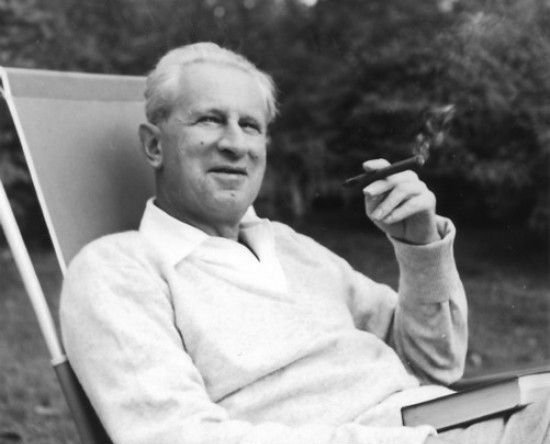
Herbert Marcuse, a German-American philosopher linked to the Frankfurt School, critiqued capitalist societies using Marxist and psychoanalytic theories. Influenced by Heidegger, he fled Nazism and gained fame in the 1960s with One-Dimensional Man, advocating for radical change. Marcuse’s work focused on ideological control, culture, and liberation until his death in 1979.
 Letters from Tomis