Book Reviews
-

Charles Duhigg’s “Supercommunicators” presents engaging stories and practical communication skills but often feels superficial and overgeneralized. While it offers relatable anecdotes and accessible advice, it lacks depth, particularly regarding cross-cultural dialogue. Ultimately, the book serves as a light introduction to communication, but may not satisfy readers seeking profound insights.
-

Samantha Harvey’s novel “Orbital” explores personal journeys within a cosmic setting but struggles with execution. The lyrical prose often overshadows emotional depth, leaving characters feeling underdeveloped. While it touches on themes of isolation and connection, the uneven pacing and repetitive introspection ultimately detract from the narrative’s impact.
-

Slavoj Žižek’s Looking Awry presents Jacques Lacan’s theories through popular culture, making complex concepts accessible. With clarity and humor, Žižek analyzes films and media, enhancing understanding of psychoanalysis while engaging readers. The book celebrates the interplay of theory and culture, appealing to both scholars and newcomers. Highly recommended for its enriching insights.
-
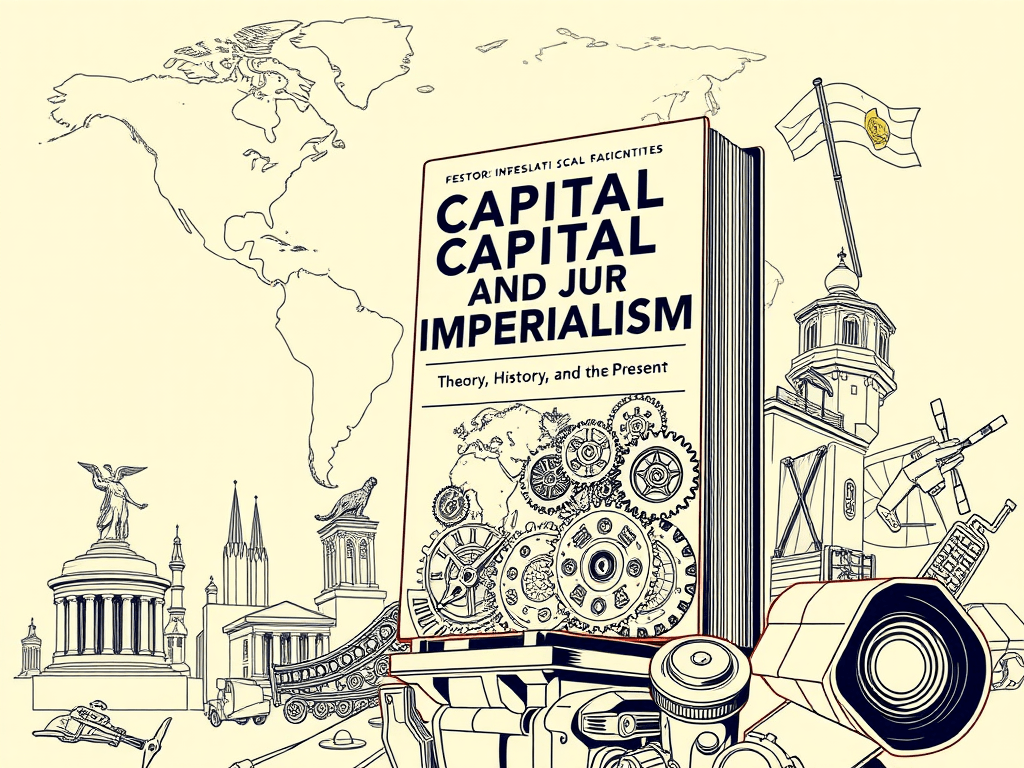
“Capital and Imperialism: Theory, History, and the Present” by Utsa and Prabhat Patnaik analyzes the connection between capitalism and imperialism, exploring their historical roots and contemporary implications. The authors provide accessible insights into global economic inequalities, emphasizing the ongoing exploitation from the Global South to the Global North and offering pathways toward a more equitable…
-
Jolande Jacobi’s The Psychology of C.G. Jung serves as a comprehensive introduction to Jungian ideas, balancing clarity and depth. Published in 1942, it covers key concepts like the psyche structure, archetypes, and individuation. While not critically evaluative, it effectively illustrates Jung’s methods and remains an essential resource for understanding analytical psychology.
-

Friedrich Engels’ Anti-Dühring critically examines Eugen Dühring’s theories while expounding Marxist thought. Through its structured approach, the book elucidates dialectical and historical materialism, addressing socialism’s scientific basis. Engaging and relevant, it has shaped socialist movements and offers essential insights into class struggle and societal transformation. A must-read for understanding socialism.
-

Rosa Luxemburg’s Reform or Revolution, written in 1899, critiques revisionist socialism, emphasizing that reforms cannot resolve capitalism’s inherent contradictions. Luxemburg advocates for revolutionary action as essential for achieving social justice, presenting a thoughtful interplay between reform and revolution. Her passionate arguments urge a collective struggle for a world beyond capitalism.
-
Nathan Thrall’s A Day in the Life of Abed Salama offers a profound portrayal of life under occupation through the lens of Abed Salama’s search for his son after a school bus accident. The narrative intertwines personal and political realities, highlighting systemic inequalities while humanizing the Palestinian experience, ultimately inspiring empathy and reflection.
-

Euripides’ play Orestes, written in 408 BCE, explores themes of class struggle and societal dynamics through a Marxist lens. The protagonists Orestes and Electra grapple with moral crises stemming from their aristocratic lineage. The play critiques the ruling elite’s corruption and the societal institutions that perpetuate inequality, urging viewers to question their own societal norms.
-
Joseph Moldover’s novel Just Until is a poignant exploration of grief, love, and healing. Through authentic characters experiencing profound loss, Moldover captures the complexities of human emotion with simple yet evocative prose. The narrative highlights both pain and hope, emphasizing the transformative power of connection and the everyday acts of healing.
 Letters from Tomis