Book Reviews
-

Alan Woods’s “Bolshevism: The Road to Revolution” provides a comprehensive Marxist analysis of the Bolshevik Party’s origins and evolution. The book highlights the ideological and strategic foundations of Bolshevism, distinguishing it from Stalinism, and emphasizes the significance of theory in revolutionary practice. This work serves as an essential resource for understanding socialist movements.
-

Samantha Harvey’s The Western Wind is a historical fiction novel set in 1491, unfolding in reverse over four days. It explores themes of memory, confession, and truth through the unreliable narration of parish priest John Reve. While praised for its lyricism and structure, some criticize its historical inaccuracies.
-

By Any Means Necessary, published by Pathfinder Press, is a powerful collection of Malcolm X’s writings that highlight his critique of racism and imperialism. It captures his political evolution towards a broader, anti-imperialist perspective. This volume serves as an essential text for understanding Black radicalism and ongoing struggles for social justice worldwide.
-

Publius Papinius Statius’s Achilleid, an unfinished first-century Latin epic, offers a unique portrayal of Achilles that blends humor, irony, and themes of gender fluidity. Through vivid episodes of his youth and complex maternal dynamics, the work challenges traditional heroism. Despite its incomplete status, it presents rich insights into identity and societal expectations.
-

Nancy Fraser’s “Cannibal Capitalism” critiques contemporary capitalism, arguing it exploits democracy, care, and the environment. Through six chapters, it examines systemic racism, undervalued care work, and ecological crises, while proposing a socialist vision. Although it offers deep insights, its dense language may limit accessibility and practical solutions.
-

Friedrich Engels’ The Origin of the Family, Private Property and the State remains vital in Marxist theory, analyzed in the 2020 Wellred Books edition. Rob Sewell’s introduction contextualizes Engels’ claims on the evolution of family, property, and state, especially regarding gender inequality. This edition enhances accessibility and relevance for contemporary discussions on social inequality.
-

Leon Trotsky’s The Revolution Betrayed critiques the Soviet Union’s deviation from revolutionary ideals under Stalin. Published in 1937 and reissued in 2015, it analyzes the rise of bureaucracy and predicts the USSR’s collapse due to systemic issues. Trotsky’s insights on democracy and governance remain relevant for contemporary discourse in political and economic contexts.
-
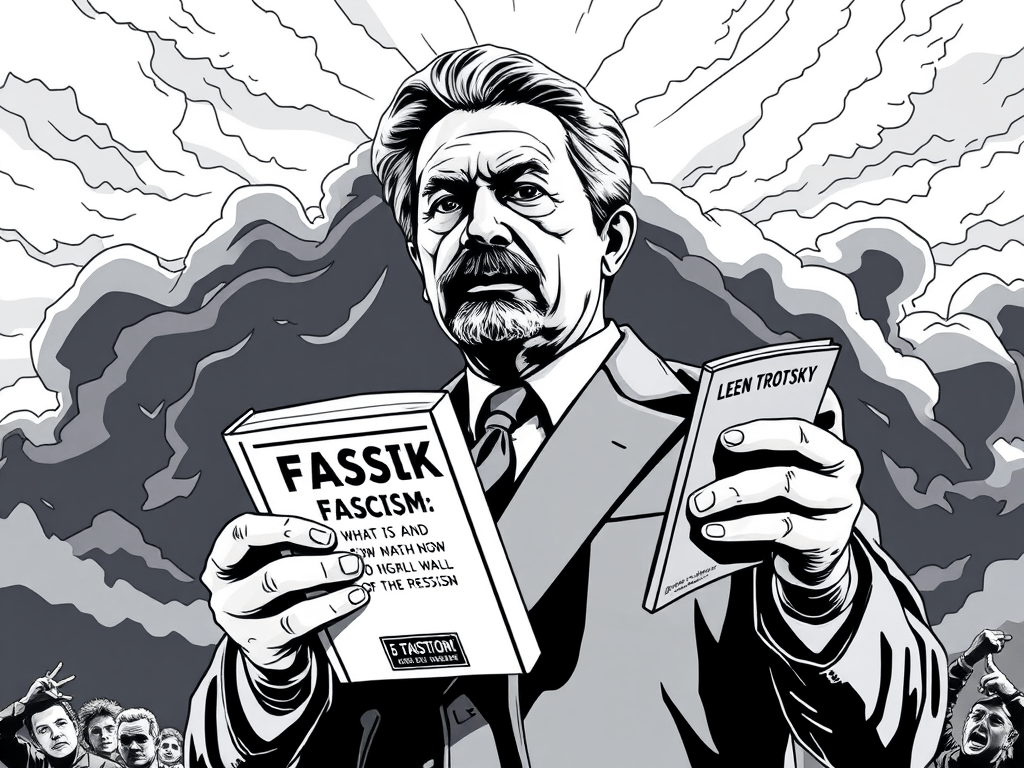
Leon Trotsky’s work, Fascism: What It Is and How to Fight It, analyzes the socio-economic factors leading to fascism’s rise, emphasizing the need for a united socialist response. Written in the 1930s, it offers insights relevant to contemporary political issues, advocating for class consciousness and proactive resistance against authoritarianism.
-

Leon Trotsky’s The Permanent Revolution critiques the necessity of mature capitalism for socialist revolutions, arguing that the proletariat can lead such movements. His analysis addresses differences within the Communist Party, particularly against Stalin’s policies. Despite editorial issues in the 2014 edition, the work remains essential for understanding Marxist theory and revolutionary dynamics.
-

Paul O’Flynn’s Them and Us in Literature examines how literature navigates identity, power, and otherness, utilizing diverse texts. Its interdisciplinary approach combines historical, sociological, and philosophical insights. O’Flynn critiques portrayals of “the other” while encouraging critical engagement, making it a vital resource for understanding literature’s impact on societal perceptions of inclusion and exclusion.
 Letters from Tomis