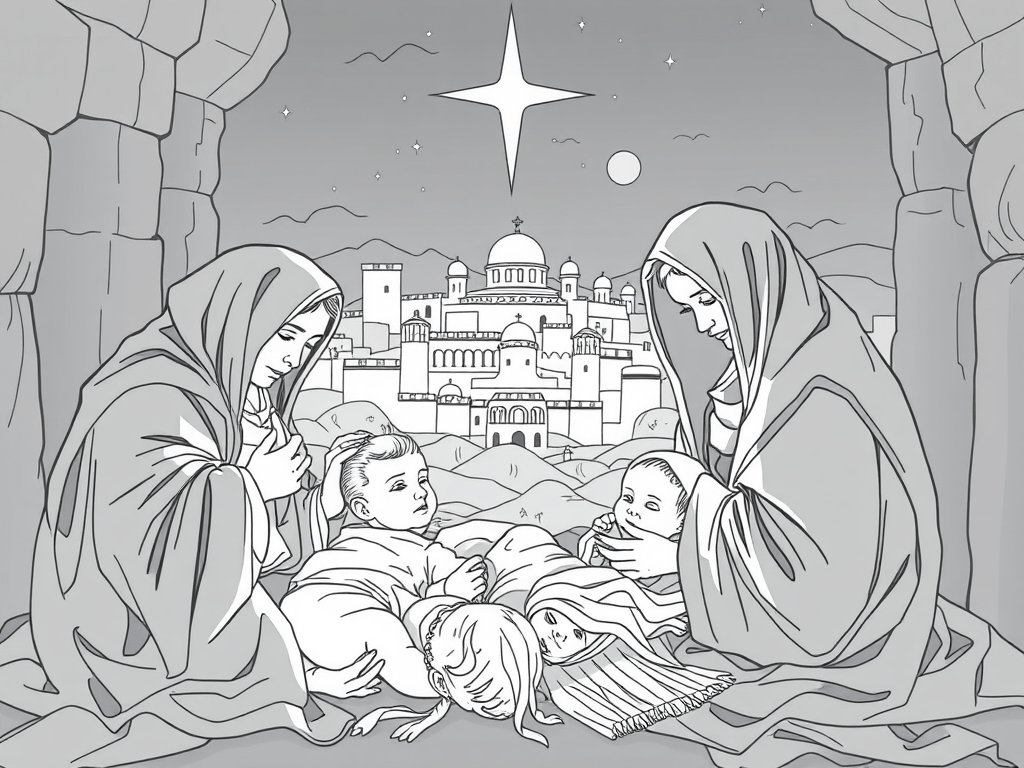
The Feast of the Holy Innocents, celebrated on December 28th on the Catholic and Episcopal calendars—commemorating the massacre of male infants in Bethlehem by King Herod as recounted in the Gospel of Matthew—is among the most troubling observances in the Christian year. Cloaked in sentimentality and pious solemnity, this feast day purports to honor the “first martyrs” of Christianity, slaughtered in a desperate attempt to eliminate the newborn Christ. Yet, like so much else in the canon of Christian tradition, the event’s historical improbability and its brutal implications demand closer scrutiny.
First, let me address the story itself. According to the Gospel of Matthew, Herod the Great, informed by the Magi of a rival “King of the Jews” foretold in prophecy, ordered the execution of all male children under the age of two in and around Bethlehem. This massacre, conveniently fulfilling a prophecy from Jeremiah, serves to frame Jesus as the promised Messiah, born under the shadow of persecution. It is a tale designed for dramatic effect, a narrative tool to underline Christ’s divine significance and to draw an immediate contrast between the brutality of worldly power and the salvation offered by the infant savior.
But did it happen? There is no evidence—none whatsoever—that such an event occurred. Josephus, the preeminent chronicler of Herod’s reign, catalogs the king’s many atrocities, including the execution of his own sons, yet he makes no mention of the wholesale slaughter of Bethlehem’s infants. The silence of other contemporary sources is deafening. Even within the Gospel tradition, the story is conspicuously absent from the other three accounts. Luke, for instance, describes the nativity without any reference to the massacre.
The geographical and demographic context also invites skepticism. Bethlehem in the first century was a small village, unlikely to house enough children under the age of two to warrant such a dramatic narrative. Herod, for all his paranoia and bloodlust, would gain little from such a localized and obscure act of terror. The massacre, then, seems less like a historical event and more like a literary contrivance—a convenient way for Matthew to align Jesus with Moses, another savior figure whose birth narrative also involves the slaughter of innocents by a tyrannical ruler.
Even if I grant the story its historical basis, its implications are no less troubling. The Christian tradition asks us to venerate the murdered children as martyrs, their deaths cast as a divine prelude to the redemption wrought by Christ. But this framing demands that we view their suffering—and the suffering of their parents—as somehow necessary, even virtuous. It transforms tragedy into triumph, an alchemy that trivializes human pain. Am I to believe that an omnipotent God, capable of orchestrating the incarnation of his son, could not devise a plan that spared these innocents? The slaughter becomes, in this theological framework, a kind of collateral damage in the divine drama of salvation.
This tendency to sacralize suffering is a recurring feature of Christian thought, one that often leads to moral absurdities. The Feast of the Holy Innocents is not merely a commemoration of an invented atrocity; it is an emblem of a worldview that too often glorifies pain, submission, and death. The Church, in its hymns and prayers for this feast, does not mourn the lost lives but celebrates them as sacrifices for a greater good. It is a theology that venerates the knife, so long as it serves a divine purpose.
And what of Herod, the supposed villain of this tale? If the massacre is a fiction, then so too is Herod’s role in it. Yet Herod’s historical reputation as a ruthless ruler has made him a convenient scapegoat for this narrative. The story perpetuates a caricature of Herod that fits neatly within the moral binaries of the Gospel but ignores the complexities of his reign. Herod was a figure of profound contradictions: a tyrant, yes, but also a builder, a politician, and a man who navigated the treacherous currents of Roman imperial power. To reduce him to the villain of Bethlehem is to diminish history itself.
The Feast of the Holy Innocents, then, is a curious relic—one that demands neither faith nor celebration but rather interrogation. It is a story that asks us to believe in the improbable, to sanctify the brutal, and to excuse the indifferent. It transforms a fabricated atrocity into an occasion for piety, offering us not a lesson in morality but an exercise in credulity.
If there is anything to be learned from this feast, it is not the resilience of faith or the triumph of divine providence but the dangers of uncritical tradition. For in venerating the fictional slaughter of the innocents, we risk losing sight of the very real suffering that continues in our own world—suffering that no god has ever seen fit to prevent.
 Letters from Tomis
Leave a comment